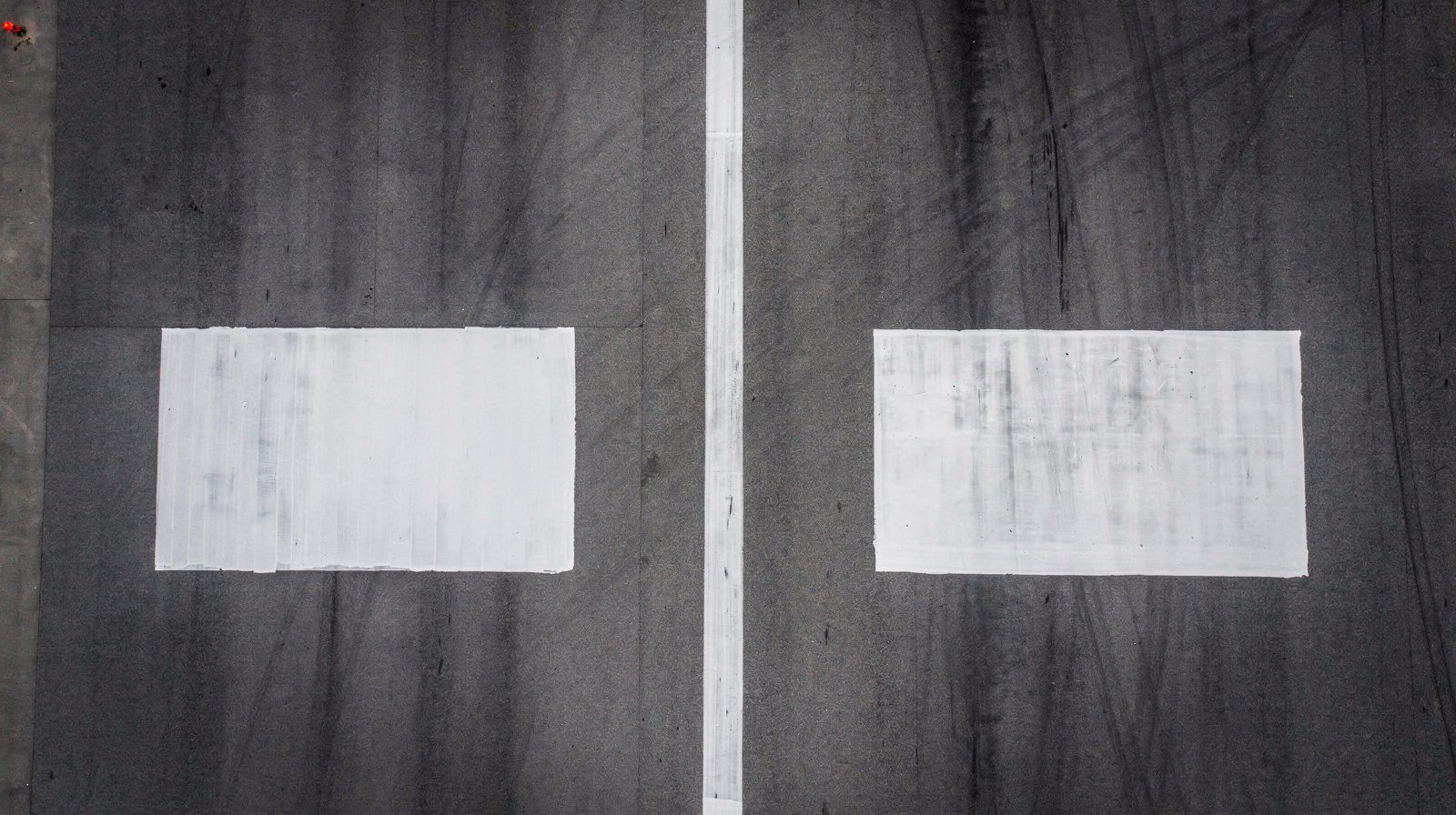
What is a Holding Position in Airport Operations?
Holding Position in Airport Operations
A holding position is a designated, visibly marked location on an airport’s movement area (runways, taxiways, or other controlled surfaces) where aircraft or vehicles must stop and await further clearance. This critical safety measure prevents unauthorized access to active runways, approach and departure zones, and protects sensitive navigational aids. Holding positions form the backbone of safe, efficient ground movement at airports of all sizes.
Definition and Core Concept
A holding position is not arbitrary. These points are precisely located and marked in accordance with international standards, such as ICAO Annex 14 and FAA Advisory Circulars, and are reinforced by signage and sometimes lighting. Their main function is to ensure that aircraft and vehicles do not inadvertently enter operational zones where a conflict or safety hazard might arise, such as runways in use or areas where instrument landing system (ILS) signals could be disrupted.
Air Traffic Control (ATC) commonly instructs pilots to “hold short of [runway/taxiway/designator],” referencing these markings. At non-towered airports, pilots are responsible for self-clearance but must still respect the holding positions. Failure to comply can result in runway incursions, a major risk factor in aviation safety.
Types and Appearance of Holding Position Markings
Runway Holding Position Markings
These are the most common and critical holding position indicators:
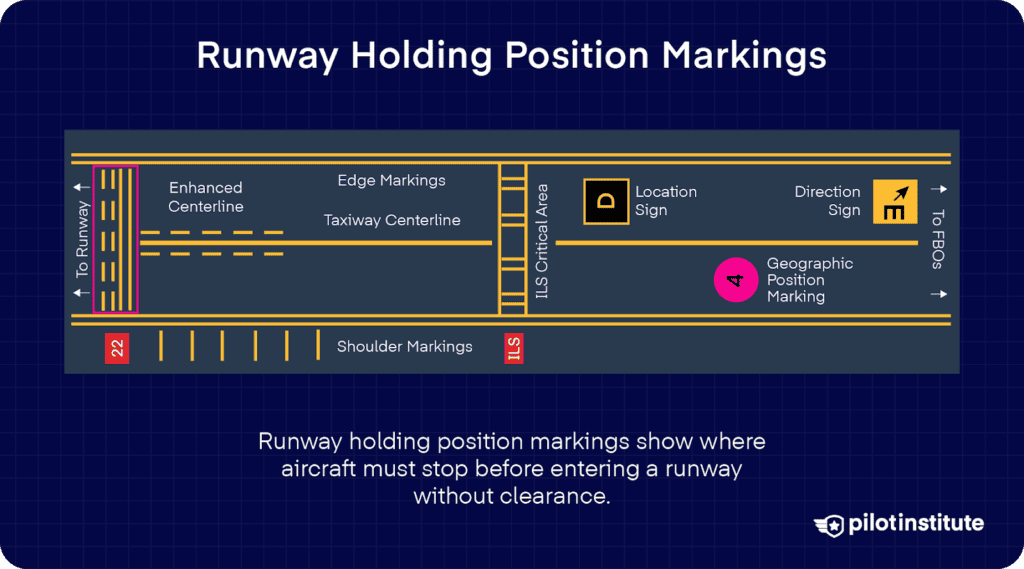
- Visual Description: Four yellow lines perpendicular to the taxiway centerline, two solid (on the holding side) and two dashed (on the runway/intersection side).
- Purpose: Prevents unauthorized entry onto active runways or their approach/departure areas.
- Placement: Spans the full width of the taxiway or runway at the intersection.
ILS Critical Area Holding Position Markings
- Visual Description: Two parallel solid yellow lines, spaced about two feet apart, joined at intervals by perpendicular lines, forming a “ladder” or “double ladder” pattern.
- Purpose: Protects the integrity of ILS signals from interference by metal objects (aircraft/vehicles).
- Placement: Positioned based on technical studies to prevent signal disruption during low-visibility operations.
Taxiway/Taxiway Intersection Markings
- Visual Description: Single dashed yellow line perpendicular to the taxiway centerline.
- Purpose: Used for positive control at busy or complex intersections, where ATC may need to meter traffic or prevent congestion.
- Placement: Across the width of the taxiway at intersections where stopping may be required.
Runway Approach/Departure Area Holding Position Markings
- Visual Description: Identical to runway holding position markings (four yellow lines: two solid, two dashed).
- Purpose: Prevents aircraft or vehicles from entering the protected approach or departure path of an active runway, even if not directly crossing the paved surface.
Locations of Use
| Location Type | Marking Type | Purpose |
|---|---|---|
| Taxiway/runway intersection | Four lines: 2 solid, 2 dashed | Hold prior to runway entry |
| Runway/runway intersection (LAHSO) | Four lines: 2 solid, 2 dashed | Land and hold short procedures/crossings |
| ILS critical area | Ladder pattern: 2 solid, joined lines | Protect ILS from interference |
| Taxiway/taxiway intersection | Single dashed line | Hold at taxiway as instructed by ATC |
| Approach/departure area | Four lines: 2 solid, 2 dashed | Prevent entry into protected airspace |
Regulatory Significance and Compliance
Holding position markings are legally binding operational controls:
- Controlled Airports: Crossing them without ATC clearance is a runway incursion, a serious safety violation.
- Uncontrolled Airports: Pilots must self-clear but still comply, vigilance and radio communication are essential.
- Vehicles: All ground vehicles must obey holding position markings and signage.
Regulations and guidance are found in ICAO Doc 4444, FAA AIM 2-3-5, and other national documents. The edge of the holding position often coincides with the Runway Safety Area (RSA) boundary.
Operational Procedures: Stepwise Guidance
1. Approaching a Holding Position
Approach the marking, identify the solid (hold side) and dashed (protected area) lines, and stop before the first solid line. Comply with ATC instructions or, at uncontrolled airports, self-clear.
2. Exiting the Runway
After landing, fully cross the holding position marking before considering the aircraft “clear” of the runway. ATC may not issue further instructions until you are fully past the marking.
3. ILS Critical Area
When told to hold short of the ILS critical area, stop before the ladder-pattern marking. Do not cross until cleared, especially during low visibility.
4. Taxiway/Taxiway Intersections
Stop at the single dashed line if instructed by ATC. These markings help manage traffic flow and prevent ground conflicts.
Operational Scenarios
Example 1:
Taxiing for takeoff, a pilot stops at the runway holding position (four lines) and waits for explicit ATC clearance before entering the runway.
Example 2:
During LAHSO, a landing aircraft must stop before the holding position marking at an intersecting runway or taxiway.
Example 3:
In fog, ATC instructs an aircraft to hold short of the ILS critical area. The pilot identifies the ladder-pattern marking and stops before it.
Example 4:
At a busy hub with multiple intersecting runways, crews may face several holding positions in sequence, including runway and ILS critical area markings.
Marking and Signage Reference
| Marking/Sign | Visual Description | Purpose/Location |
|---|---|---|
| Runway Holding Position | Four yellow lines: 2 solid, 2 dashed | Taxiway/runway intersections |
| ILS Critical Area Holding Position | Ladder pattern: two solid, joined lines | Near ILS antennas |
| Taxiway/Taxiway Intersection | Single dashed yellow line | Taxiway intersections |
| Runway Approach/Departure Area | Four yellow lines: 2 solid, 2 dashed | Approach/departure zones |
| Holding Position Sign (Runway) | White on red (e.g., “22L”, “09R”) | Next to runway holding position |
| ILS Critical Area Sign | “ILS” in white on red | Next to ILS critical area marking |
| Boundary Signs | Black on yellow | Indicates exit from runway/ILS area |
Schematic Diagrams
Runway Holding Position Marking:
|      |      ||  .  .  .  .  .  .  .  .  .  .  .  .  .  .  |      |      |
|______|______||__solid__solid__dashed__dashed__|______|______|
(Hold Side)                                      (Runway Side)
Solid lines are always on the holding side, dashed on the side facing the runway/protected area.
ILS Critical Area (Ladder Pattern):
|====| |====| |====| |====| |====| |====|
Two parallel solid lines joined by short perpendicular lines at intervals.
Key Takeaways
- Hold short of the solid lines, never cross without explicit clearance.
- Markings and signs are standardized for global recognition and compliance.
- Respecting holding positions prevents runway incursions and protects navigation aids.
Holding position markings are a fundamental component of airport safety, ensuring safe separation, protecting critical airspace and signals, and enabling efficient, organized ground movement.
For more information or to discuss airport marking solutions:
Frequently Asked Questions
- How do I identify which side of a holding position marking to stop on?
- For runway holding position markings (four yellow lines: two solid, two dashed), always stop on the side with the two solid lines. The solid lines indicate the holding (protected) side, whereas the dashed lines face the runway or area you must not enter without clearance.
- What happens if I cross a holding position without clearance?
- Crossing a holding position marking without the required clearance from Air Traffic Control constitutes a runway incursion, which is a serious safety violation. Such actions are subject to investigation, reporting, and possible enforcement or administrative sanctions.
- Are holding position markings used at all airports?
- Yes. All ICAO member states and national authorities such as the FAA require holding position markings at airports with paved runways and taxiways. They are present at controlled (towered) and uncontrolled (non-towered) airports, and must always be respected.
- What is the difference between a runway holding position and an ILS critical area holding position?
- A runway holding position is marked by two solid and two dashed yellow lines and is used to prevent unauthorized entry onto a runway. An ILS critical area holding position uses a 'ladder' pattern (two solid lines connected by perpendicular lines) to protect sensitive instrument landing system signals from interference by aircraft or vehicles.
- What is LAHSO and how do holding positions relate to it?
- LAHSO (Land and Hold Short Operations) is a special clearance where an aircraft lands and must stop short of an intersecting runway, taxiway, or designated point. The holding position marking denotes the exact stop point for LAHSO, ensuring no conflict with crossing traffic.
- Do vehicles have to obey holding position markings too?
- Yes. All ground vehicles operating in the movement area must comply with holding position markings and cannot cross them without proper ATC clearance, just like aircraft.
This is a reference entry. TarmacView provides drone inspection services and doesn't sell the equipment or materials described in this glossary.