Inspecting Between Movements: Low Visibility and Slots
The runway belongs to the traffic, not to the inspector. Where inspection windows come from, what a short slot changes, and when night beats day.
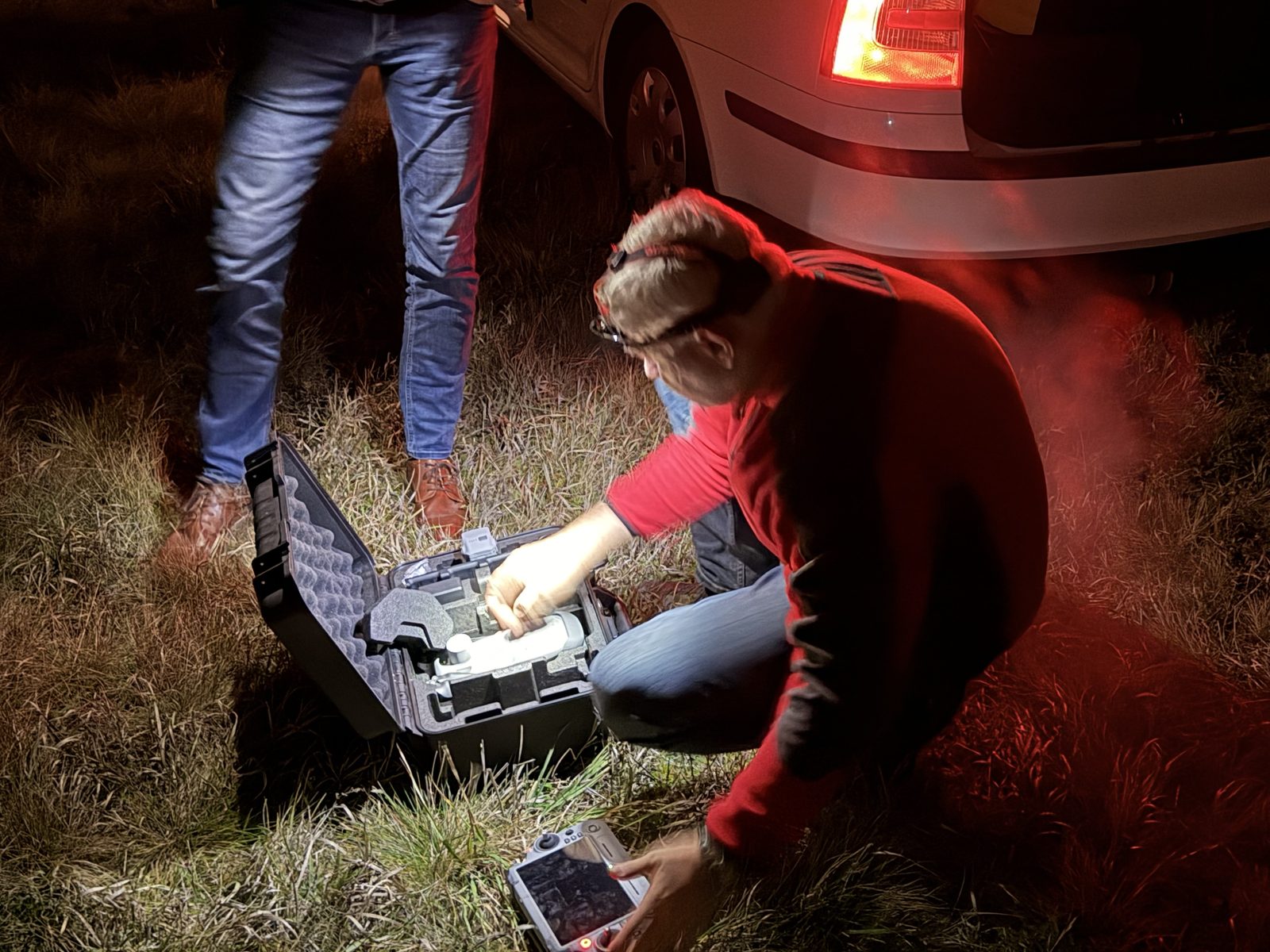 NIGHT SETUP · FIELD CREW
The constraint that shapes everything else
Every technical decision in an airfield inspection sits downstream of one fact. The runway belongs to the traffic, not to the people measuring it. Nobody at the airport is going to rearrange an arrival bank so a camera can look at a light.
So the work is organised around a window that somebody else defines, at a time somebody else picks, in weather nobody controls. That is not a complaint. It is the design brief.
Where the window actually comes from
Four shapes cover most of what we see.
A scheduled night closure. The runway is formally shut, usually for maintenance that was planned months ago. This is the most comfortable window and the hardest to get, because it was booked for resurfacing or light replacement and the inspection is a guest on somebody else’s slot.
A maintenance slot. Shorter, recurring, often weekly, and already owned by the airfield technical team. Sharing it works well when what we measure is what they are about to adjust.
Gaps between movements. At a quiet regional field there may be no closure at all, just a stretch of afternoon with nothing inbound. The runway stays open. Work stops when something calls, and resumes when it has cleared. This is the most common case and the one the whole product is built around.
Seasonal traffic. Fields with a summer charter peak or a winter one have a low season where the same airport is a completely different scheduling problem. If your traffic has a shape, the inspection should be scheduled into the trough rather than fought into the peak.
| Window source | Who owns it | What it is good for | The catch |
|---|---|---|---|
| Scheduled night closure | Airfield operations | Full airfield, lighting at night, unhurried | Rare, booked far ahead, shared with other works |
| Recurring maintenance slot | Technical team | Measure-adjust-remeasure in one visit | Short, and the adjustment work comes first |
| Gaps between movements | ATC , live | Most of the airfield, runway never closed | Interrupted, unpredictable, needs standing coordination |
| Low season | Commercial scheduling | Anything, at a relaxed pace | Only exists if the traffic is seasonal |
What a short window changes about method
The instinct is to go faster. That is the wrong answer, because the measurement is what it is and rushing it produces a report you cannot defend.
What a short window actually changes is how much has to be finished before you arrive. The mission plan, the flight paths, the positions of every unit, the entry and exit routes, the frequency and the callsign are all settled in advance. On site, the crew is executing a plan rather than making one. A visit runs about an hour on site per runway with both directions measured, and that hour holds because almost nothing is being decided during it. We wrote about what that hour costs and why in what a PAPI inspection actually costs .
The second thing preparation buys is the ability to stop cleanly. An interrupted pass is only expensive if resuming means starting over. Because the flight path is stored and repeatable, a pass that gets cut short by an inbound aircraft is resumed at the same geometry rather than reflown from the beginning. That is the difference between an interruption costing two minutes and costing twenty.
The third is ordering. The parts of the airfield with the least coordination overhead go first. Anything that requires being near the runway strip goes into the part of the window where we know the position is protected. If the window collapses, what is left undone should be the cheapest thing to come back for, not the most important.
Coordination, and what a NOTAM does not buy you
Two parties have to agree before anything flies. ATC controls the airspace and the sequencing. The aerodrome operator controls the movement area and the ground access. They are not the same conversation, and getting one without the other is a common way to lose a day.
A NOTAM publishes the activity. It tells crews and operators that something is happening at that field, in that period, in that area. It is a notification. It is not permission, it does not reserve the runway, and it does not survive contact with an aircraft that needs to land. Real access on the day comes from the live agreement with the tower, not from the published notice, and any ATC clearance can be withdrawn the moment the approach sequence changes.
The practical version is simple. We work to a published notice, a briefed procedure with the tower, a radio in the crew’s hand for the whole window, and an agreed way to be off the strip immediately. The last item is the one that gets you invited back.
At a field working gaps rather than a closure, that agreement is the whole method. The crew holds outside the strip, flies when the tower says the gap is real, and stands down on one call without asking why. It costs passes. It also means the runway never closed, which is the reason the visit was possible at all. Vehicle access, escort and the route to the threshold come from the aerodrome operator separately, and at a field with contractors already working airside, that queue is sometimes the longer of the two.
Weather, light, and which measurements tolerate them
Weather shrinks the window from both ends. It delays the start, and it can end the work before the slot does.
Not everything degrades at the same rate. Photometric measurement of lights cares about optical path and stray light. Surface imaging cares about ground resolution and even illumination. Those are different sensitivities, and they fail in different conditions.
| Condition | Light photometry | Surface imaging | Note |
|---|---|---|---|
| Clear night | ✓ Best case | ✗ Needs artificial light | The classic night window |
| Overcast day, dry | ✓ Usable | ✓ Best case | Even, diffuse illumination |
| Bright low sun | ✗ Glare and washout | ✗ Long shadows | Worst of both |
| Haze or light mist | ✗ Scatter distorts the beam | ✓ Tolerant if dry | Optical path is the problem |
| Wet surface | ✓ Unaffected | ✗ Reflections mask defects | Standing water hides cracks |
| Strong or gusty wind | ✗ Position instability | ✗ Position instability | Aircraft limit, not an optical one |
Reduced meteorological visibility is worth separating from reduced runway visual range . RVR is an instrumented value along the runway, and it is what drives whether the airport is running low visibility operations at all. When it is, the movement area becomes a far more tightly controlled place, the protected areas grow, and a drone in the strip is no longer a conversation the tower wants to have. In practice, LVP means the inspection window is gone, whatever the forecast said. The same is true when traffic is holding because conditions are near weather minima . The airport’s whole attention is on getting aircraft down, and it should be.
Why night is better and worse at the same time
For anything photometric, night is the better condition. No sunlight in the optical path, no reflected glare off the pavement, the light output measured against a dark background rather than picked out of daylight. Fixtures are also on at their operational intensity at night, which is the state you actually want to measure. That is why the crew photograph in the hero of this post is a night shot. Most lighting work happens after last movement.
For the pavement, night is the worse condition. Surface imaging depends on light falling evenly on the surface, and at night there is none, so you are either lighting it artificially or accepting worse data. Cracks and joint breakdown read as shadow and texture, both of which need real illumination to be seen consistently.
That tension is the honest reason a single airfield visit sometimes spans a night window and a daylight one. If you are told everything can be done in the dark, ask what happens to the pavement scan.
Why the window is short in the first place
An open runway is how an airport earns. A closed one is landing fees not collected, an arrival bank pushed, aircraft holding or diverting, and a knock-on that outlasts the closure itself. At a single-runway airport there is no second surface to absorb it. We do not publish a figure for what an hour of closure costs, because it is specific to the field and inventing one would be worse than saying nothing. Every operator we work with already knows their own number, and it is why the slot you were offered is as short as it is.
Which is the whole argument for measuring from a drone rather than an aircraft. The comparison is not drone against drone. It is a method that fits into a gap between movements against one that needs the runway to itself for hours.
The work that fits in that gap is on the products pages, or tell us about your airfield and we will tell you what window we would need.
Founded by flight-inspection veterans who spent decades measuring PAPI lights for aviation authorities across Europe.
Learn more
Related terms
03 TERMSLighting Schedule
A Lighting Schedule in airport operations is a regulated plan detailing the timing, intensity, and control of all lighting systems, integrating safety, regulatory, and environmental requirements to ensure safe and efficient airfield and landside operations.
Intersection (Airport Operations)
In airport operations, an intersection is where two or more runways, taxiways, or a runway and a taxiway physically cross or merge. Proper management of intersections is essential for safe and efficient movement of aircraft and vehicles, with strict procedures and markings to prevent runway incursions.
Lane and Runway Width Measurement
Lane width and runway width are fundamental geometric parameters affecting operational safety, capacity, and pavement marking layout. Width reduction from edge deterioration, vegetation encroachment, or shoulder drop-off is a recurring inspection finding. Covers width standards (AASHTO, ICAO Annex 14 runway width by code), measurement methods (tape, GPS, LiDAR, drone), and implications of width…
Further reading
03 ARTICLES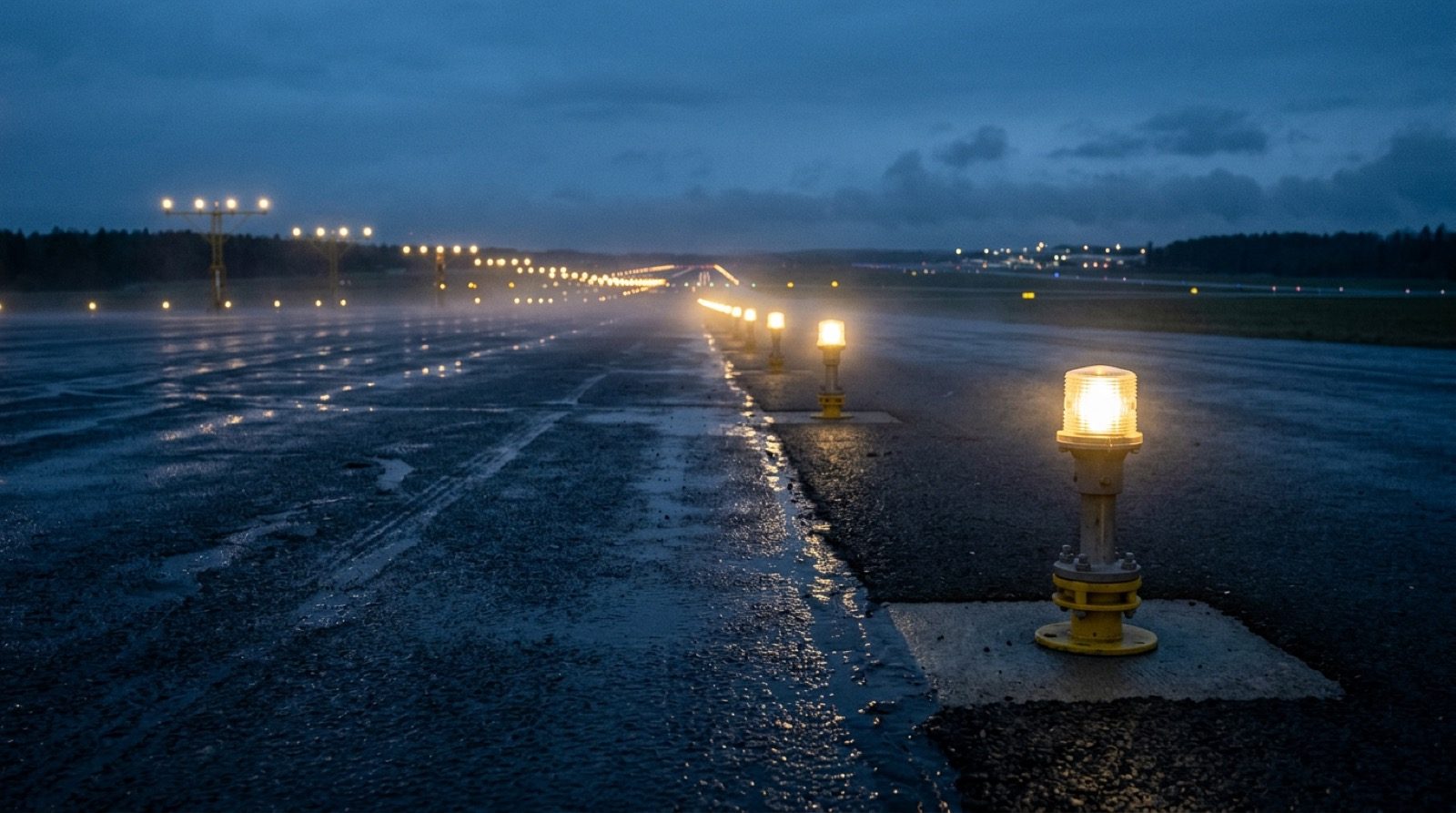
Airfield Lighting Inspection Without Closing the Runway
How an aerodrome verifies its lighting each year without a runway closure: what must be checked, what evidence an authority accepts, where a drone…
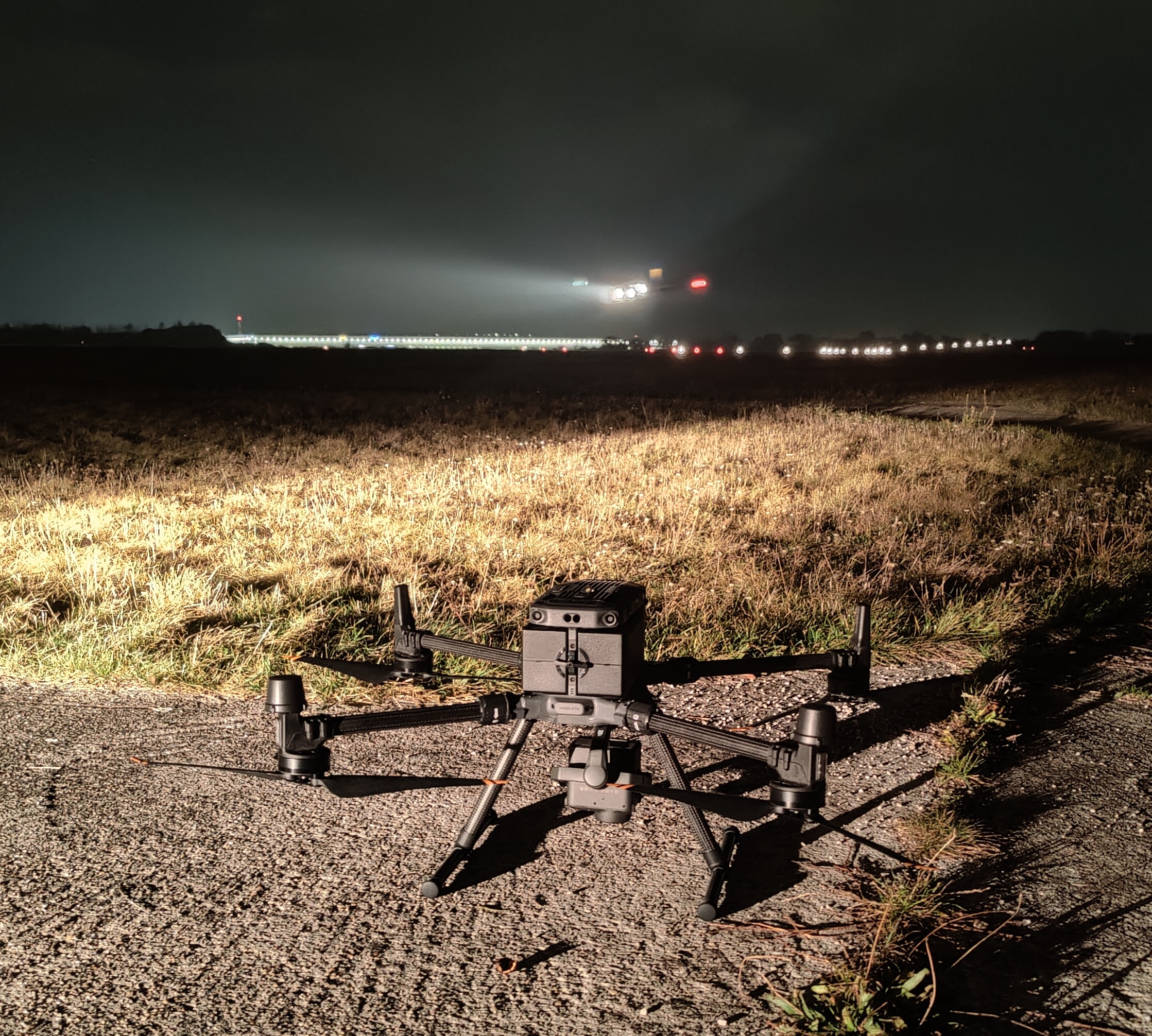
Drone Airport Inspection: Method and Limits
How a drone inspects an aerodrome between aircraft movements: the mission profile, RTK positioning, tower coordination, the evidence chain, and where…

Runway Edge Light Inspection: What ICAO Requires and How It Is Measured
What ICAO Annex 14 requires of runway edge lights, what it leaves open, and how intensity, colour and coverage are actually measured in the field.