What is High Intensity Runway Lighting (HIRL)?
High Intensity Runway Lighting (HIRL): Essential Guide for Airport Safety and Operations
Definition and Overview
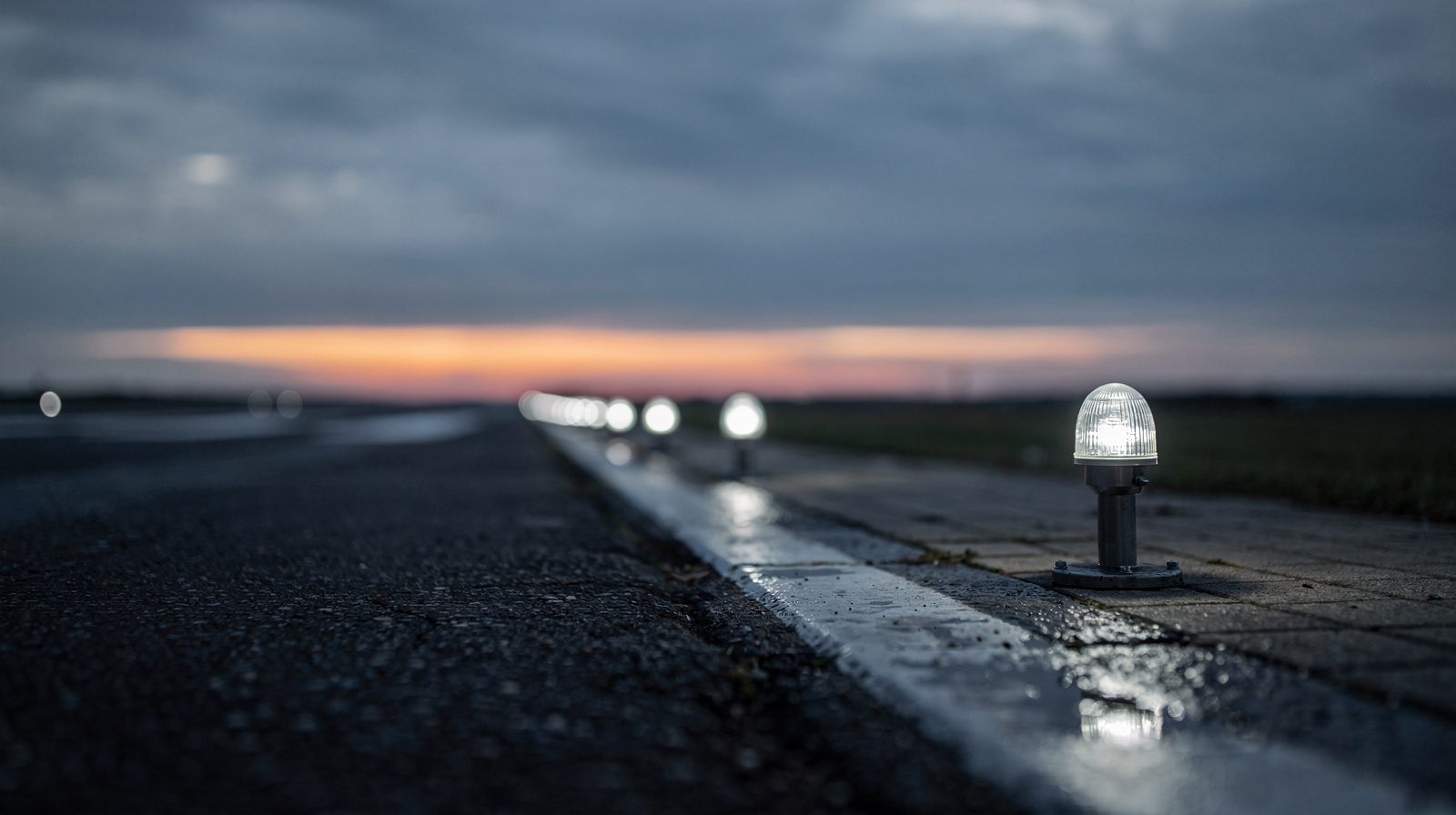
High Intensity Runway Lighting (HIRL) is a specialized system of high-output lighting fixtures installed along the entire length of airport runway edges and at runway thresholds. As the brightest category of runway edge lighting, HIRL is designed for runways supporting precision instrument approaches, high-traffic operations, and operations under severely reduced visibility conditions, such as fog, heavy precipitation, or nighttime.
Unlike Medium (MIRL) or Low Intensity Runway Lighting (LIRL), HIRL systems are capable of multiple intensity settings, with maximum outputs typically exceeding 10,000 candelas per fixture. These lights enable pilots to visually identify runway boundaries, thresholds, caution zones, and runway ends, even when ambient light is minimal or weather conditions are poor.
HIRL is a core safety feature at commercial and international airports, supporting both routine and emergency operations. It is mandated for runways equipped for Category I, II, and III Instrument Landing System (ILS) operations under ICAO Annex 14 and FAA standards, making it fundamental to modern airfield infrastructure.
Function and Operational Purpose
Unambiguous Runway Delineation
HIRL serves as the primary visual reference for pilots during takeoff, landing, and taxiing in low-visibility or night conditions, when other cues, such as painted markings or signage, may be obscured. By emitting extremely bright, focused beams, HIRL:
- Clearly marks the usable runway surface and edges
- Distinguishes the runway from taxiways, aprons, and safety areas
- Provides critical guidance during instrument approaches, especially at low decision heights
- Reduces pilot workload and minimizes the risk of runway excursions, incursions, or misidentification
Support for Precision Approaches
HIRL is especially critical for precision approach runways that handle Category I, II, and III ILS procedures, where pilots may transition from instrument navigation to visual landing cues as low as 50 feet above the runway. The system’s brightness and color sequencing cut through fog, rain, and snow, ensuring safe landings even when other visual references are lost.
Operational Continuity
By enabling safe operations in all weather and lighting conditions, HIRL increases airport capacity, reduces delays, and maintains economic viability, supporting both scheduled and emergency flights.
Technical Features and Specifications
Intensity and Control
- Output: Maximum intensity often exceeds 10,000 cd
- Adjustability: Multiple selectable steps (typically 3–6) for brightness to match ambient conditions
- Light Source: Modern systems use high-efficiency LEDs for lower power consumption, longer life, and better color fidelity
- Elevation: Fixtures are elevated 14–26 inches (35–66 cm) above the runway to optimize cockpit visibility and avoid snow/water obstruction
- Durability: Weather-resistant, corrosion-proof, impact-resistant, designed to withstand jet blast and snow removal
System Architecture
- Power: Series circuits (usually 6.6A), with grid, solar, or hybrid power options for redundancy
- Control: Remotely adjustable from ATC tower or via Pilot-Controlled Lighting (PCL) at non-towered airports
- Automation: Advanced installations utilize wireless networks and environmental sensors for automatic adjustment
Reliability
- Redundant power supplies (generators, batteries)
- Continuous monitoring for lamp failure and circuit integrity
- Quick-disconnect mounting for easy maintenance
Placement and Color Conventions
Standard Placement
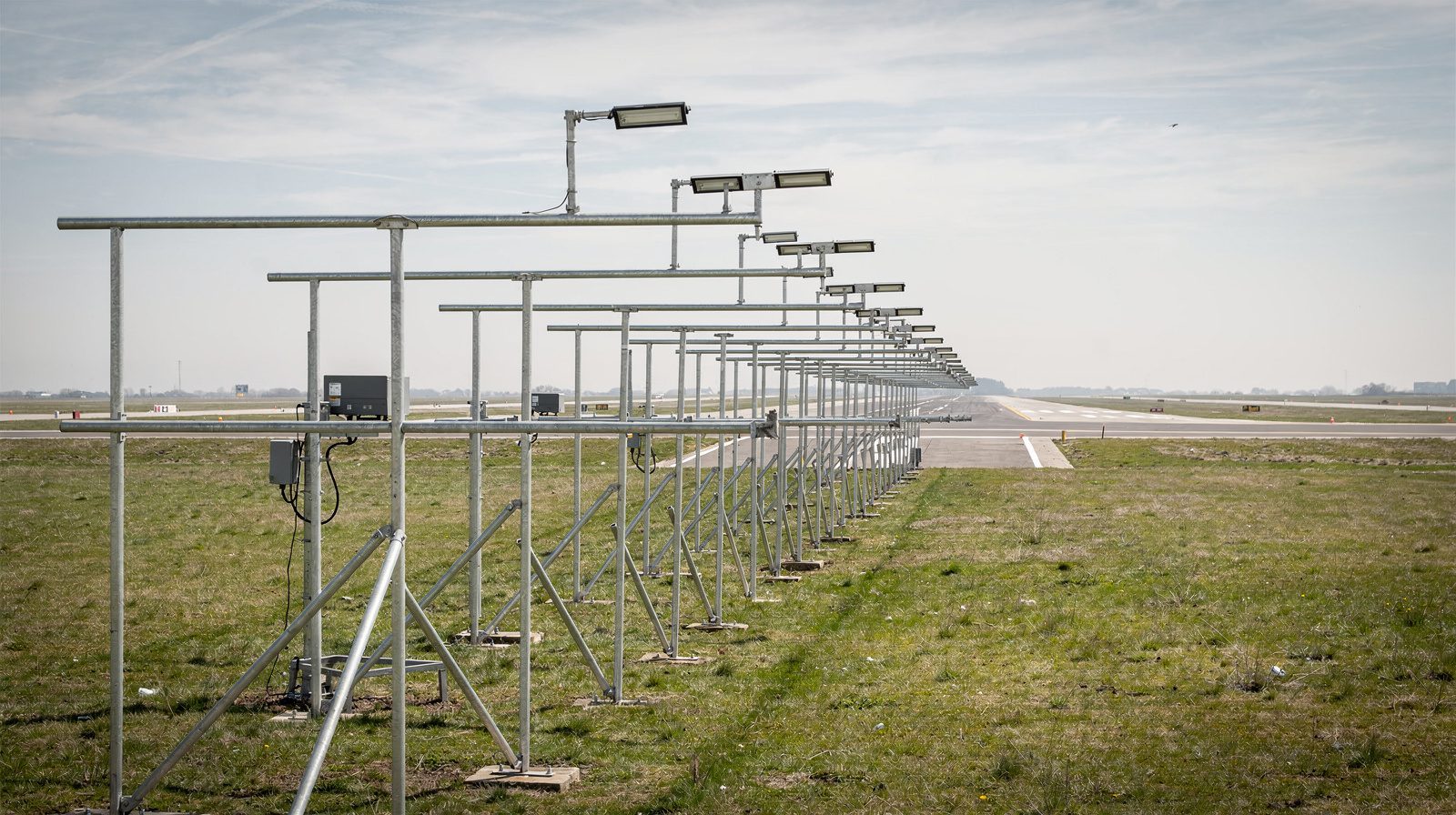
- Edge lights: 2–10 feet (0.6–3 m) from the runway edge, maximum spacing 200 feet (60 m), closer for Cat II/III or severe weather
- Threshold bars: Across runway width at the designated threshold
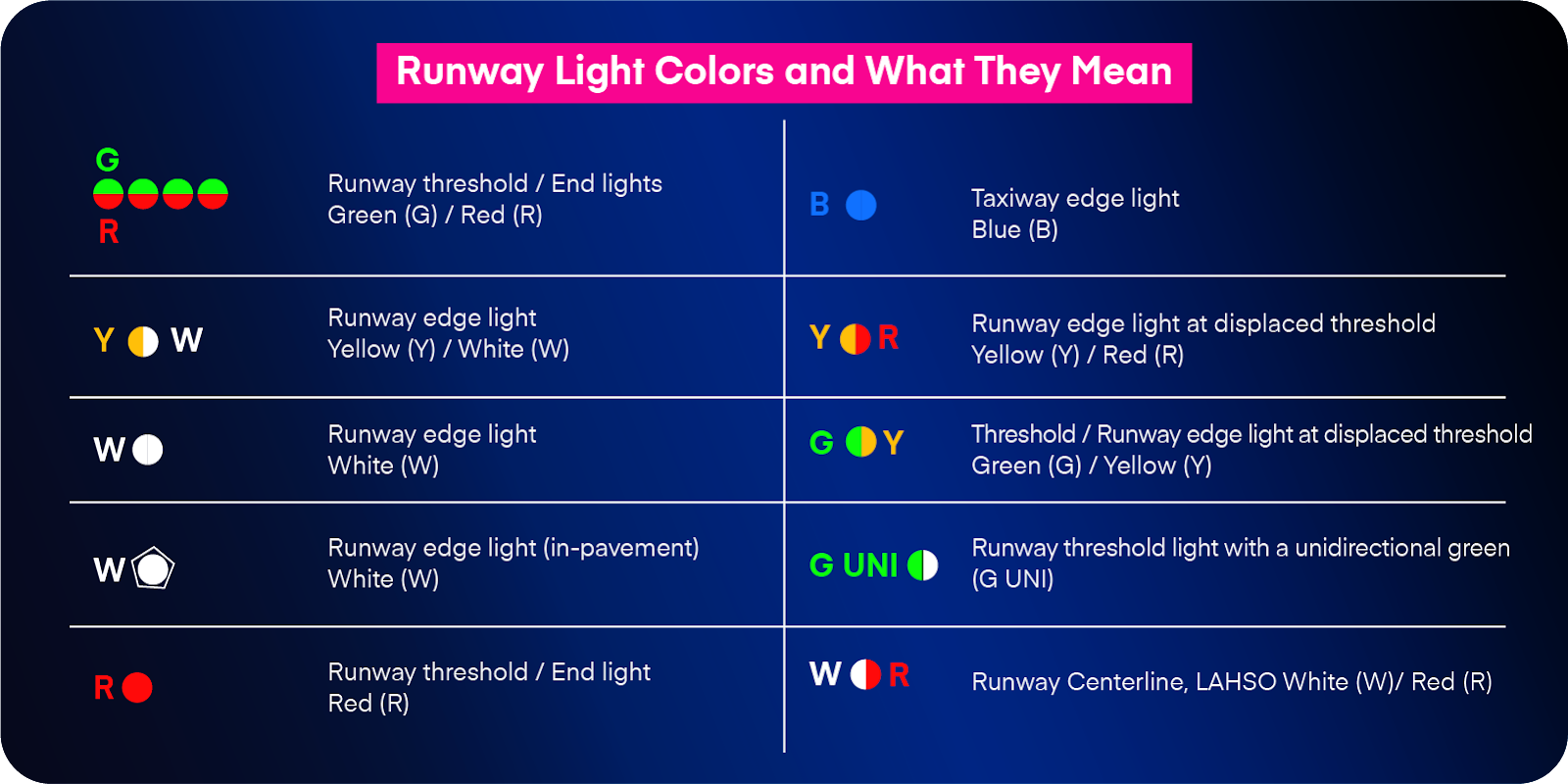
Color Coding
| Segment | Color | Purpose |
|---|---|---|
| Most of runway length | White | Usable runway edges |
| Last 2,000 ft or half length* | Yellow | Caution zone: approaching runway end |
| Runway end | Red | Absolute end of landing/takeoff surface |
| Threshold (approach side) | Green | Start of landing surface |
| Threshold (departure side) | Red | End of runway for departing aircraft |
*Whichever is less, per FAA/ICAO
This sequencing aids pilots in judging remaining runway length and enhances situational awareness during all phases of flight.
Control and Operational Settings
Intensity Adjustment
- Manually by ATC based on weather and operational needs
- Automated via environmental sensors (light, visibility, weather)
- Pilot-controlled at uncontrolled airports via VHF radio clicks (PCL)
Integration
HIRL is coordinated with:
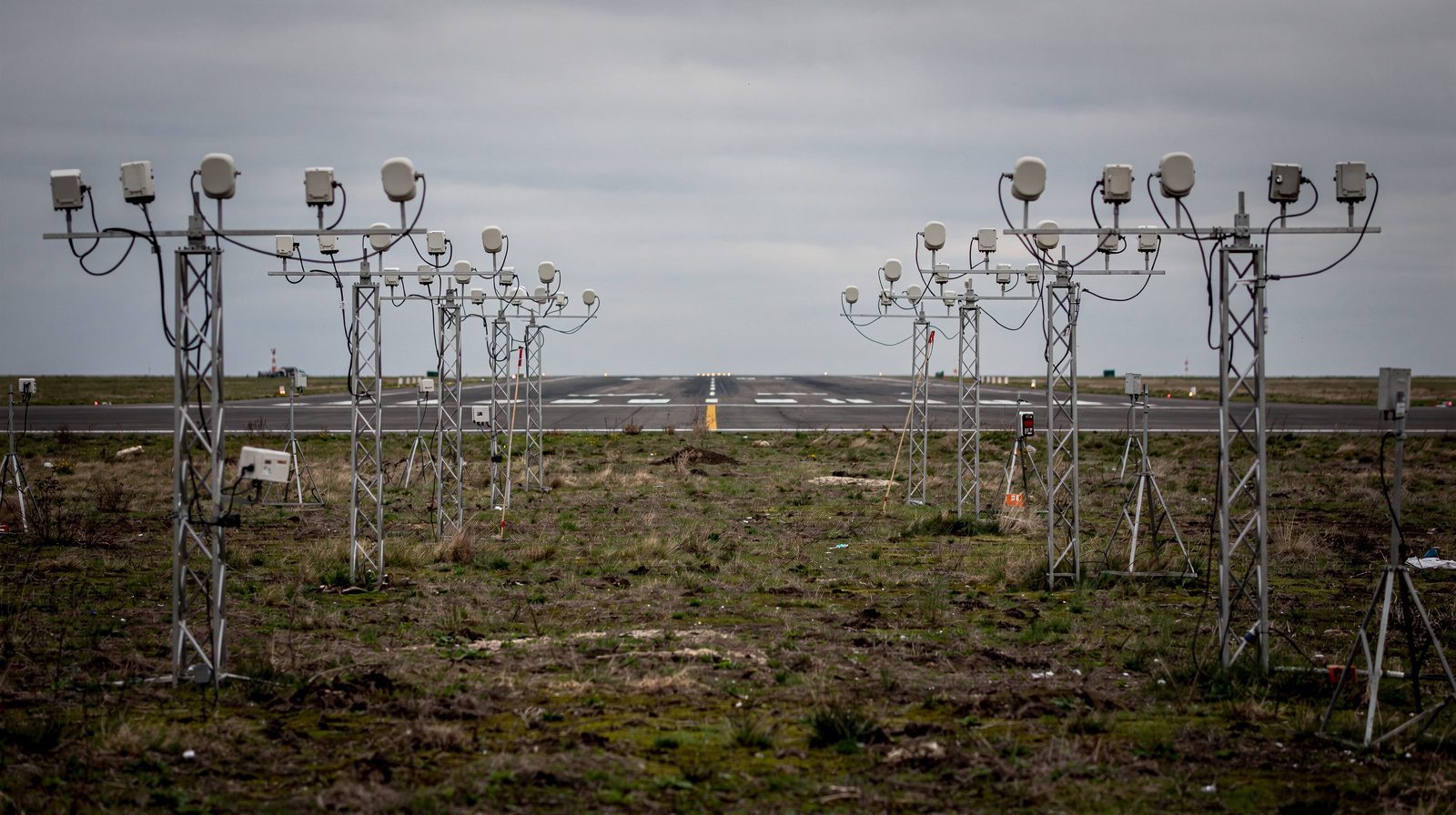
- Approach Lighting Systems (ALS)
- Precision Approach Path Indicators (PAPI)
- Runway Centerline and Touchdown Zone Lights
- Taxiway and Stop Bar Lights
This integration provides seamless, comprehensive visual guidance from approach to rollout and taxi.
Regulatory Standards and Compliance
FAA
- Required on precision approach runways at public-use airports
- Placement: 2–10 feet from edge, up to 200 feet apart
- Color sequence: White/yellow/red as described
- Adjustable intensity
- Integration with other lighting for Category II/III operations
ICAO
- Mandatory for Cat I, II, III runways
- Uniform color/placement requirements
- Photometric standards for brightness and chromaticity
Other Agencies
- EASA, CASA, Transport Canada, AFAC: Align with ICAO/FAA
- Certification: Must meet rigorous testing and be listed on official registers
Use Cases and Operational Scenarios
- Night operations: Principal visual reference when natural light is inadequate
- Low visibility (IMC): Essential for safe landings/takeoffs in fog, rain, snow, dust
- Instrument approaches: Enables Cat I/II/III ILS to minimum or zero-zero decision heights
- Emergency/diversion: Keeps runway accessible for urgent or unscheduled flights
- High-traffic/complex airports: Prevents navigation errors and incursions
Maintenance, Reliability, and Modern Developments
- Routine inspections and cleaning to maintain visibility
- LED upgrades for longer life and reduced maintenance
- Remote monitoring for rapid fault detection and correction
Examples
1. Night Instrument Approach:
A commercial jet on a rainy night safely aligns and lands using HIRL, even as painted markings are obscured.
2. Aborted Takeoff:
A pilot sees the edge lights change from white to yellow, knows they are in the caution zone, and aborts the takeoff before reaching the red runway end lights.
3. Missed Approach in Fog:
A pilot becomes visual only with ALS and HIRL, executes a missed approach, and maintains safe orientation using the lights.
Summary
High Intensity Runway Lighting (HIRL) is a cornerstone of modern airport safety and operational efficiency. By providing the brightest, most reliable runway edge and threshold illumination, backed by strict international standards, HIRL ensures that airports remain open, safe, and efficient in all conditions, supporting global air transport and protecting lives.
Looking to upgrade your airport’s lighting or need expert guidance on HIRL systems? Contact us or Schedule a Demo today.
Frequently Asked Questions
- What is High Intensity Runway Lighting (HIRL)?
- HIRL is a high-output lighting system installed along the edges and thresholds of airport runways. It provides the brightest possible visual guidance for pilots, especially during low visibility or night-time operations. HIRL is mandatory for runways supporting precision instrument approaches and is regulated by international standards.
- Why is HIRL important for airport safety?
- HIRL enhances runway visibility in adverse conditions, reducing the risk of excursions, incursions, and misidentification. It supports safe takeoffs, landings, and taxiing during night or low-visibility weather, ensuring compliance with global aviation regulations.
- How is HIRL different from other runway lighting systems?
- HIRL provides much higher light intensity than Medium (MIRL) or Low Intensity Runway Lighting (LIRL) systems. It is required on runways used for precision approaches and can be adjusted in intensity to suit ambient conditions, offering superior visibility and control.
- How are HIRL lights controlled and adjusted?
- HIRL systems can be controlled by air traffic controllers from the tower, automatically via environmental sensors, or by pilots using radio-based pilot-controlled lighting (PCL) at uncontrolled airports. Intensity can be set to multiple levels to match weather and operational needs.
- What are the color and placement conventions for HIRL?
- HIRL edge lights are white along most of the runway, change to yellow (amber) in the last 2,000 feet or half the runway (whichever is less), and red at the runway end. Threshold lights show green to approaching aircraft and red to those at the runway end. Lights are typically placed 2–10 feet from the runway edge, spaced up to 200 feet apart.
- What standards regulate HIRL?
- HIRL is regulated by ICAO Annex 14 globally and by the FAA in the United States. These standards specify technical requirements for intensity, color, placement, and integration with other lighting and approach systems. National agencies like EASA and Transport Canada align their rules closely with ICAO and FAA.
- How does HIRL integrate with other airport lighting systems?
- HIRL works alongside approach lighting systems (ALS), runway centerline lights, touchdown zone lights, and taxiway lighting to provide comprehensive visual guidance for pilots. This integration ensures safe navigation and runway use in all operational scenarios.
This is a reference entry. TarmacView provides drone inspection services and doesn't sell the equipment or materials described in this glossary.