What is a glide slope angle?
Glide Slope Angle – Comprehensive Glossary & Technical Analysis
Definition and Context
The glide slope angle is the vertical angle between the runway’s horizontal plane and the intended approach path of an aircraft during landing. Most commonly set at 3 degrees, this angle is foundational in both precision and non-precision approaches, ensuring safe obstacle clearance, stabilized approach profiles, and optimal runway threshold crossing, typically around 50 feet above ground level.
Glide slope angle is at the heart of approach system design and operation. It is referenced in precision systems like the Instrument Landing System (ILS), satellite-guided approaches like Localizer Performance with Vertical guidance (LPV), and visual aids such as the Precision Approach Path Indicator (PAPI) and Visual Approach Slope Indicator (VASI). Regulatory bodies, including ICAO and FAA, standardize this angle for safety, uniformity, and global interoperability.
Pilots use the glide slope angle during approach to control descent, configure the aircraft, and ensure a stabilized landing. The angle dictates descent rates, approach briefings, and cross-checks, making it central to pilot training, approach chart design, and airline standard operating procedures.
Technical Description
The glide slope angle serves as the reference for electronic and visual guidance systems:
- ILS Glide Slope: The ILS glide slope transmitter, typically positioned 300 meters from the runway threshold and offset laterally, emits two overlapping UHF signals (90 Hz and 150 Hz modulations). Their overlap forms a “beam” at the selected angle, usually 3 degrees, which aircraft instruments decode as on-path, above, or below.
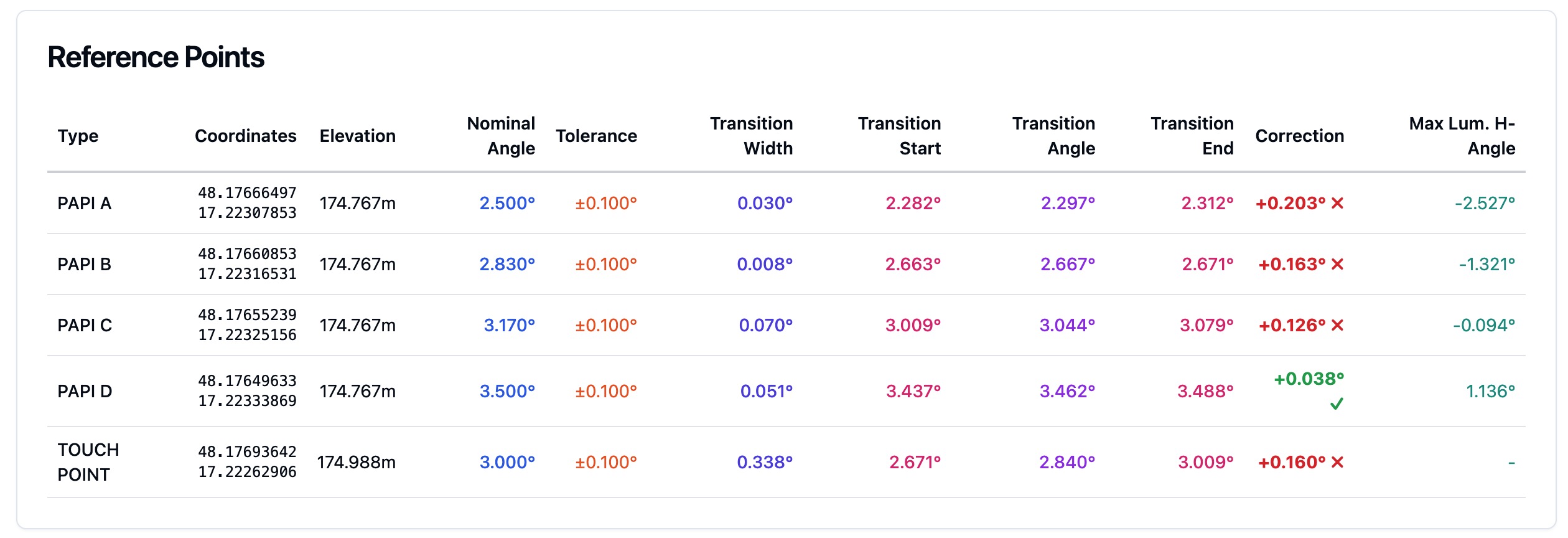
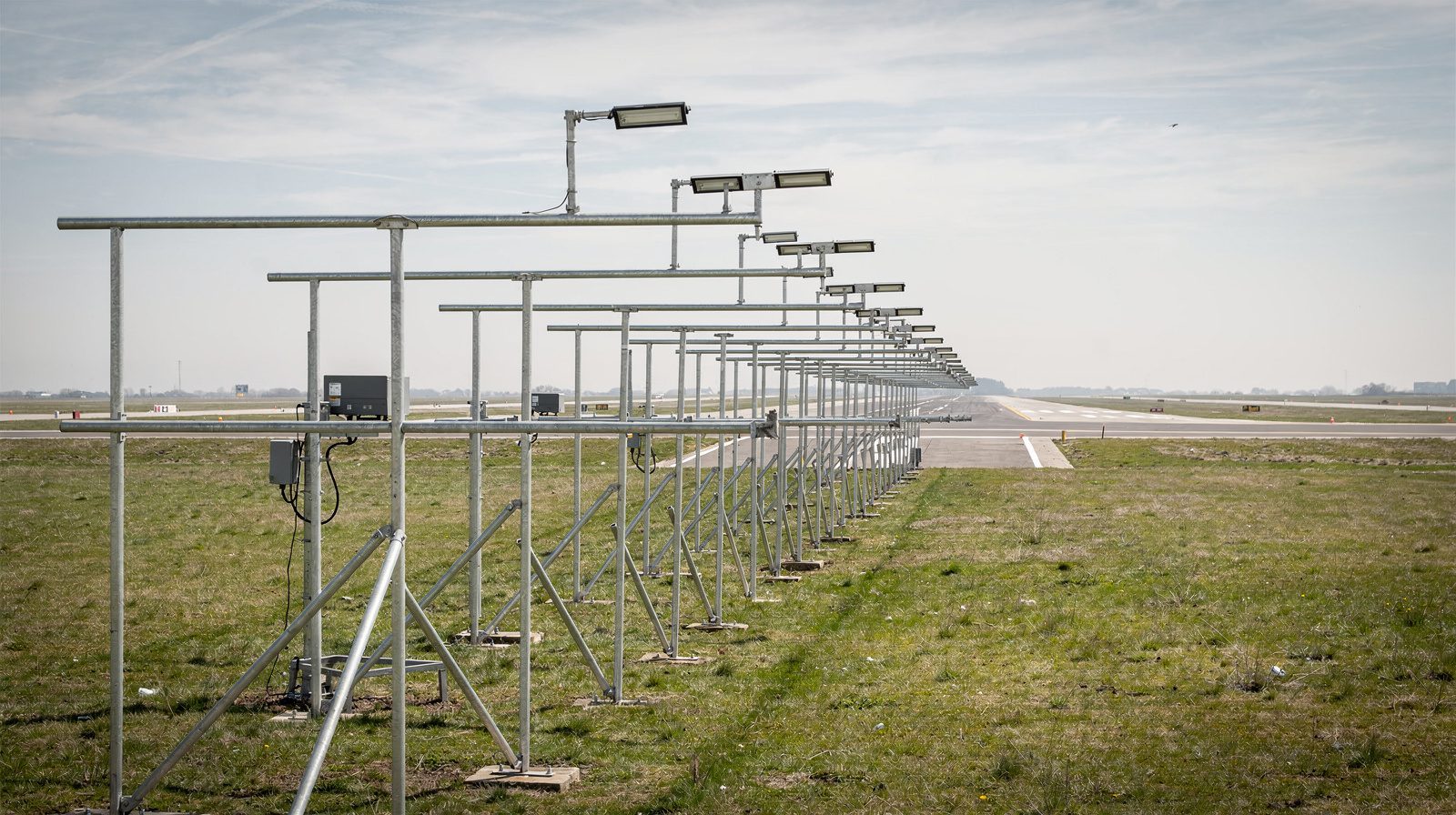
- Visual Glide Slope Indicators (VGSI): PAPI and VASI systems use color-coded lights to visually indicate glide slope. For PAPI, two red and two white lights signal the aircraft is on the correct path, more reds or whites mean below or above the glide slope, respectively. These systems are calibrated to match the electronic path unless local constraints dictate otherwise.
ICAO standards specify tolerances and installation requirements to ensure signal integrity, angular width, and avoidance of false signals. For example, ILS glide slope usable width is typically 1.4 degrees above and 0.4 degrees below the nominal path.
How Glide Slope Angle Works
Electronic Guidance (ILS)
- The ILS glide slope transmitter broadcasts two UHF signals, modulated at 90 Hz and 150 Hz.
- The overlap of these signals forms a “virtual plane” at the published angle.
- Aircraft receivers measure which modulation is stronger, above the path indicates “fly down,” below means “fly up.”
- Pilots intercept the glide slope from below at the published glide slope intercept altitude, then use cockpit indicators to remain centered on the path.
- Crossing the runway threshold, the aircraft should be ~50 feet AGL on a 3-degree slope, ensuring safe landing within the aiming zone.
Visual Glide Slope Systems
- PAPI and VASI are installed along the runway and project light patterns corresponding to the correct angle.
- Pilots visually interpret these patterns for immediate corrections, two red/two white for correct path on PAPI.
- These are crucial in visual conditions and as cross-checks during instrument approaches.
Satellite-Based Guidance (LPV)
- For LPV and RNAV (GPS) approaches, glide paths are calculated by the aircraft’s avionics using position data and published approach procedures.
- The vertical path mimics a 3-degree ILS glide slope and is displayed in the cockpit, providing nearly identical cues to pilots.
Operational Use Cases and Examples
- ILS Approach: An aircraft follows the localizer for lateral guidance, intercepts the glide slope from below, and maintains the 3-degree descent to the threshold, crossing at 50 feet AGL and touching down within the aiming point.
- LPV Approach: Where ILS is unavailable, SBAS-corrected GPS defines a virtual 3-degree glide path, avionics display cues similar to ILS for a stable approach.
- Visual Approach (PAPI/VASI): In clear weather, pilots align with the visual indicator lights for the 3-degree path, ensuring a safe and stabilized approach.
- Steep Slope Operations: Airports like London City require angles up to 5.5 degrees due to terrain or urban settings, necessitating special aircraft and crew certification.
Practical Calculations
Descent Rate (3-degree angle)
| Groundspeed (kt) | Required Descent Rate (fpm) |
|---|---|
| 90 | 450 |
| 120 | 600 |
| 150 | 750 |
Formula:
Descent Rate (fpm) = Groundspeed (kt) × 5
Altitude vs. Distance on 3-degree Slope
| Distance from Threshold (NM) | Altitude Above Threshold (ft) |
|---|---|
| 5 | 1,500 |
| 3 | 900 |
| 1 | 300 |
A 3-degree glide slope provides a manageable descent rate, sufficient time for configuration, and consistent obstacle clearance.
Hazards, Errors, and Special Considerations
- False Glide Slope Capture: Harmonics above the true glide slope can be erroneously captured if intercepting from above, leading to steep, unsafe descents. Always intercept from below.
- Deviation Risks: Above the slope risks long landings, below risks terrain or obstacle impact. Prompt correction or go-around is essential.
- Non-Standard Angles: Where steeper or shallower angles are required, special briefings, aircraft capability, and training are necessary.
- Disparities between VGSI and Electronic Slope: If PAPI/VASI and ILS glide slopes differ, pilots must follow regulatory guidance, often the higher path, referencing approach plates.
Rules of Thumb
- Intercept glide slope from below to avoid false capture.
- Descent Rate for 3 degrees: Multiply groundspeed (kt) by 5.
- At 5 NM, be 1,500 feet above threshold elevation on a 3-degree path.
- Stabilized by 1,000’ AGL for IFR (500’ for VFR), or go around if not stabilized.
Comparison: ILS, LPV, VGSI, and Others
| System | Guidance Type | Source | Typical Angle | Precision Status | Notes |
|---|---|---|---|---|---|
| ILS | Lateral & Vertical | Ground (UHF/VHF) | 3° | ICAO Precision | Gold standard for CAT I/II/III |
| LPV | Lateral & Vertical | Satellite/SBAS | 3° | Not ICAO Precision | Mimics ILS, APV approach |
| VGSI | Vertical only | Visual/Lighting | 3° | Not ICAO Precision | May differ locally |
| GLS, PAR | Lateral & Vertical | Ground/Satellite | 3° | ICAO/Custom | Used in specific regions/airports |
Stabilized Approach Criteria
A stabilized approach means the aircraft is at the correct speed, configuration, descent rate, and on the correct glide path by a specified minimum altitude, typically 1,000 feet AGL for instrument and 500 feet AGL for visual approaches. This reduces risk and is mandated by ICAO, FAA, and EASA.
Checklist for a stabilized approach:
- On glide slope and course
- Correct landing configuration
- On target speed and descent rate (<1,000 fpm unless briefed otherwise)
- Landing checklist complete
Regulatory Framework
- ICAO Annex 10: ILS technical standards, glide slope tolerances
- ICAO Annex 14: Runway and obstacle clearance requirements
- FAA AIM 1-1-9, 5-4-5: U.S. approach standards and procedures
- EASA CS-ADR-DSN: European aerodrome design, glide path lighting
- IFALPA: Endorsement of 3-degree glide slopes for global standardization
Cross-Referenced Glossary Terms
- Precision Approach: Approach with both lateral and vertical guidance, e.g., ILS, PAR.
- Missed Approach Point (MAP): The point by which a missed approach must be initiated if visual reference is lacking.
- Visual Glide Slope Indicator (VGSI): Systems like PAPI and VASI that visually cue on-path/off-path approach.
- Stabilized Approach: Approach flown with stable speed, descent rate, configuration, and on-path alignment.
- Obstacle Clearance: Vertical/horizontal protection ensuring the aircraft remains clear of obstacles on approach.
Example Scenario
ILS Approach to Runway 27 with PAPI: A pilot prepares for an ILS approach to Runway 27. The approach chart confirms a 3-degree glide slope and a 50-foot threshold crossing height. The localizer is intercepted, and the glide slope is captured from below at the published altitude. The pilot maintains a 600 fpm descent at 120 knots, cross-checks ILS indications with PAPI (two red/two white lights), and crosses the threshold at 50 feet AGL, ensuring a safe and stabilized landing within the aiming zone.
Pilot’s Glide Slope Angle Best Practices Checklist
- Pre-Approach: Review published glide slope angle and threshold crossing height. Check for discrepancies between ILS and VGSI.
- During Approach: Intercept from below, monitor descent rate, cross-check altitude vs. distance, and ensure stabilized configuration.
- Error Mitigation: Watch for false glide slope, especially if intercepting from above. If VGSI/ILS differ, follow approach chart and regulations.
- Go-around: If not stabilized by the required altitude, execute a missed approach.
Final Notes
The 3-degree glide slope angle is a global standard that balances safety, obstacle clearance, and operational efficiency. Mastery involves understanding descent calculations, approach cross-checks, error recognition, and regulatory requirements. Always reference current charts, aircraft limitations, and err on the side of safety.
This glossary entry serves as a technical and operational reference for pilots, instructors, and aviation professionals seeking in-depth understanding of the glide slope angle’s role in safe, consistent approach and landing operations.
Frequently Asked Questions
- Why is the standard glide slope angle set at 3 degrees?
- A 3-degree glide slope provides optimal obstacle clearance, manageable descent rates for most aircraft, and ensures a stable, predictable approach path. It is widely adopted by regulatory authorities like ICAO, FAA, and EASA for both safety and operational efficiency.
- How do pilots maintain the glide slope angle during approach?
- Pilots use electronic guidance from systems like ILS or LPV, or visual aids such as PAPI/VASI, to align with the published glide slope angle. They adjust pitch and power to maintain the path, using cockpit indications and cross-referencing approach charts and visual cues.
- What happens if an aircraft captures a false glide slope?
- Capturing a false glide slope, typically by intercepting from above, can lead to dangerously steep approaches. To prevent this, procedures require intercepting the glide slope from below at the published altitude and promptly executing a missed approach if any anomalies are detected.
- Are there exceptions to the 3-degree glide slope at some airports?
- Yes, some airports, due to terrain, obstacles, or environmental constraints, use non-standard glide slope angles, either steeper (e.g., London City at 5.5 degrees) or shallower. These require special procedures, aircraft certification, and pilot training.
- How is the required descent rate calculated for a 3-degree glide slope?
- A quick rule is: Descent Rate (fpm) = Groundspeed (kt) × 5. For example, at 120 knots, descend at 600 fpm to stay on a 3-degree glide slope.
This is a reference entry. TarmacView provides drone inspection services and doesn't sell the equipment or materials described in this glossary.