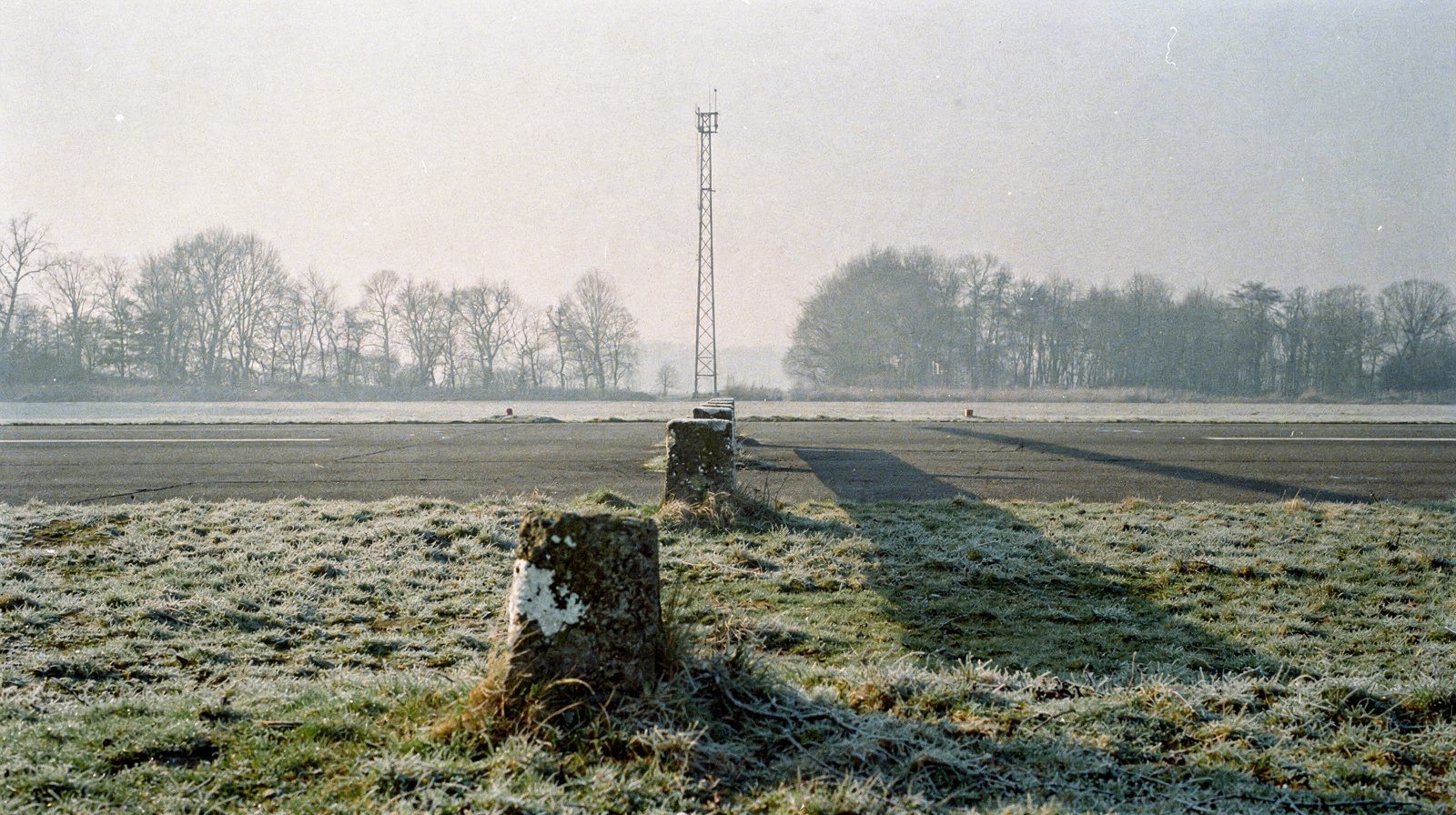
What is a FATO (Final Approach and Takeoff Area)?
Definition
A final approach and take-off area (FATO) is a defined area of a heliport where the final approach ends and the take-off starts. The pilot completes the last part of the approach to a hover or landing over this area. The pilot starts the take-off from it (CS HPT-DSN.A.020, AC 150/5390-2D paragraph 1.8.8). Every heliport has at least one FATO.
CS-HPT-DSN uses the name “runway-type FATO” for a FATO that has a shape similar to a runway. Where helicopters in performance class 1 use a FATO, the FATO includes the rejected take-off area.
CS-HPT-DSN is the EASA specification for the design of heliports. It applies to surface-level VFR heliports at aerodromes in the scope of Regulation (EU) 2018/1139. AC 150/5390-2D is the FAA advisory circular for heliport design.
FATO, TLOF, safety area and helipad
These terms describe different things. A heliport has all of them, but not always as separate surfaces.
| Term | What it is | Source |
|---|---|---|
| Heliport | An aerodrome or a defined area on a structure for the arrival, departure and surface movement of helicopters (EASA). An area of land, water or structure for helicopter landings and take-offs, with associated buildings and facilities (FAA). | CS HPT-DSN.A.020, AC 1.8.15 |
| FATO | The area over which the final approach ends and from which the take-off starts. | CS HPT-DSN.A.020, AC 1.8.8 |
| TLOF | The touchdown and lift-off area. A helicopter may touch down or lift off on it. The FAA adds that it is load-bearing and normally centred in the FATO. | CS HPT-DSN.A.020, AC 1.8.46 |
| Safety area | A defined area around the FATO. It reduces the risk of damage to helicopters that accidentally leave the FATO. EASA adds that it is free of obstacles, other than those that air navigation needs. | CS HPT-DSN.A.020, AC 1.8.38 |
| Helipad | A small designated area, usually with a prepared surface, for the take-off, landing or parking of helicopters. A helipad on an airport is not a heliport. | AC 1.8.14 |
How they fit together:
- TLOF inside or outside the FATO. CS-HPT-DSN puts one TLOF inside the FATO, or collocates TLOFs with helicopter stands (B.120). The FAA says a TLOF is typically inside a FATO but can be outside it. It cannot be outside for rooftop operations (AC 2.6, 2.7.1).
- FATO without a TLOF. The FAA allows a FATO for common-use approaches and departures only. One or more TLOFs then stand outside it (AC 2.8.6.4).
- FATO on a runway. Helicopters may use the runway for the final approach and take-off. A separate FATO may then be unnecessary (GM1 HPT-DSN.B.100).
- D. CS-HPT-DSN defines D as the largest overall dimension of the helicopter with the rotors turning. The FAA defines D as the greater of the overall length and overall width (AC 1.8.3).
Size
For helicopters in performance class 2 or 3, CS HPT-DSN.B.100 needs a FATO that contains a circle with a diameter of at least:
- 1 D, if the helicopters weigh more than 3,175 kg at take-off
- 0.83 D, if they weigh 3,175 kg or less
For performance class 1, the dimensions come from the helicopter flight manual. If the manual gives no width, the width is at least D. CS-HPT-DSN takes the performance classes from Regulation (EU) No 965/2012 and ICAO Annex 6 Part III (GM1 HPT-DSN.A.020).
FAA Table 2-1 gives length and width as 1.50 D for general aviation and hospital heliports. For transport heliports it gives 1.66 D, and not less than 100 ft (30.5 m). The two systems measure D differently, so the figures do not compare one to one.
At a site above 1,000 ft (305 m) above mean sea level, the FAA says a longer FATO adds a safety margin. For example, it adds 80 ft (24.4 m) at 3,200 ft (AC 2.8.5, Figure 2-11).
The TLOF holds a circle of at least 0.83 D. Suppose a TLOF stands inside a FATO that can hold a circle larger than 1 D. Then CS HPT-DSN.B.120 puts the centre of the TLOF at least 0.5 D from the FATO edge.
Surface and load-bearing
CS HPT-DSN.B.100 says the FATO surface should:
- resist the effects of rotor downwash
- be free of irregularities that harm take-off or landing
- have bearing strength for a rejected take-off, in performance class 1
- provide ground effect and rapid drainage
- have a mean slope of not more than 3 per cent in any direction
A local slope should not exceed 5 per cent for performance class 1, or 7 per cent for performance class 2 or 3. The FATO should be obstacle-free. A TLOF that shares the FATO may carry visual aids that are no higher than 5 cm.
The FAA gives different gradients (AC 150/5390-2D, paragraph 2.8.4):
- A load-bearing FATO slopes away from the TLOF edge at 0.5 to 5 per cent. Where a helicopter will land, the slope is 2 per cent at most.
- A non-load-bearing FATO, or one that helicopters do not use, has no specific gradient. The FAA advises a slope of 5 per cent or more away from the TLOF for drainage. It also says to stabilise the surface.
The FAA also says that a FATO outside the TLOF need not be load-bearing. The operator must mark the TLOF as load-bearing (paragraph 2.8.2). The operator may not mark the TLOF, or may want helicopters to land anywhere in the FATO. Then the FATO must carry the dynamic loads of the design helicopter. The edge of the FATO next to the TLOF is at the same height as the TLOF. If the FATO is unpaved, treat it to prevent loose stones and other flying debris from rotor downwash (paragraph 2.8.3).
On an elevated heliport, the FAA says to design the FATO and its supporting structure for the dynamic loads of the design helicopter (paragraph 2.8.6.1). As an option, the FATO outside the TLOF may be non-load-bearing and extend into clear airspace (paragraph 2.8.6.3). A FATO can also stand over water.
Safety area
CS HPT-DSN.B.130 surrounds the FATO with a safety area that need not be solid. It extends at least 3 m or 0.25 D from the FATO edge, whichever is greater. Each external side is at least 2 D for a quadrilateral FATO. The outer diameter is at least 2 D for a circular FATO. Other rules:
- The surface should be treated to prevent flying debris from rotor downwash.
- When solid, the surface next to the FATO should be continuous with it. It should not rise above a plane that slopes up at 4 per cent from the FATO edge.
- A protected side slope should rise at 45 degrees from the outer edge of the safety area to a distance of 10 m.
- No mobile object should be on the safety area during helicopter operations.
- No fixed object should be above the plane of the FATO, except frangible objects that must be there because of their function.
- An object that must be there should stay below a plane 5 cm above the FATO. This applies if it is less than 0.75 D from the FATO centre. Farther out, it should stay below a plane that starts 25 cm above the FATO and slopes up at 5 per cent.
The FAA sets the safety area width by the type of heliport and by which markings exist. For general aviation, hospital and similar heliports it ranges from 0.28 D to 0.50 D. The minimum width ranges from 10 ft (3 m) to 30 ft (9.1 m) (Table 2-4). The FAA says to remove all fixed objects above the FATO elevation. Frangible lights are the exception, and they may stand up to 2 in (51 mm) high (paragraph 2.9.1). The safety area need not be load-bearing (paragraph 2.9.2).
FATO and runway separation
Helicopters and aeroplanes may operate at the same time. CS-HPT-DSN then gives a minimum distance between the FATO edge and the edge of a runway or taxiway (GM1 HPT-DSN.B.100):
| Aeroplane or helicopter mass | Distance |
|---|---|
| Up to but not including 3,175 kg | 60 m |
| 3,175 kg up to but not including 5,760 kg | 120 m |
| 5,760 kg up to but not including 100,000 kg | 180 m |
| 100,000 kg and over | 250 m |
The note to the table says these values mainly reduce the risk of wake turbulence. It also refers to other requirements, such as the minimum runway strip width. A FATO should not be near taxiway intersections or holding points where jet efflux is likely to cause high turbulence.
The FAA gives a recommended distance from the FATO centre to the runway centreline for VFR operations. It ranges from 300 ft (91 m) to 700 ft (213 m), depending on the sizes of the airplane and the helicopter (Table 5-1).
Marking
CS HPT-DSN.F.520 to F.570 set these markings. A FATO needs the perimeter marking only where its extent is not self-evident.
- Heliport identification marking. A white letter H. For a FATO that is not runway-type, it stands at or near the centre of the FATO. If the FATO contains a TLOF, the H coincides with the centre of the TLOF.
- FATO perimeter marking. On a paved FATO that is not runway-type, the perimeter is a white dashed line. Each dash is 30 cm wide and 1.5 m long, with 1.5 to 2 m between dashes. An unpaved FATO has flush in-ground markers of the same size.
- FATO designation marking. A runway-type FATO may carry a two-digit number at its beginning. It tells the pilot which FATO it is.
- Aiming point marking. An equilateral triangle with sides of at least 9 m, made of continuous white lines 1 m wide. It shows the preferred approach direction and that the FATO surface is not intended for touchdown.
- TLOF markings. A TLOF perimeter marking is a continuous white line at least 30 cm wide. A touchdown/positioning marking is a yellow circle with a line at least 0.5 m wide.
The FAA marks the FATO perimeter with a 12 in (0.3 m) dashed white line, with segments of about 5 ft (1.5 m) (paragraph 4.6.1). It does not mark the FATO perimeter if any part of the FATO is not load-bearing. It marks the load-bearing area instead.
Lights
CS HPT-DSN.F.670 needs FATO lights at a heliport used at night. They can be omitted if the FATO and TLOF nearly coincide and TLOF lights exist, or if the extent of the FATO is self-evident. The lights are fixed, omnidirectional and white. They are no higher than 25 cm. The spacing along the edge is:
- not more than 50 m on a square or rectangular FATO, with at least four lights per side including one at each corner
- not more than 5 m on any other shape, with at least ten lights
Aiming point lights are at least six white omnidirectional lights in the pattern of the aiming point marking (F.680). TLOF perimeter lights are fixed omnidirectional green lights, spaced at not more than 5 m (F.690).
The FAA makes FATO perimeter lights optional and specifies green lights, at most 25 ft (7.6 m) apart (AC 150/5390-2D, Table 4-1). For general aviation and hospital heliports, it does not light the perimeter of a FATO that is not entirely load-bearing. Near an aircraft taxiway, a pilot may confuse green FATO lights with green taxiway centreline lights. The FAA then allows yellow lights (paragraph 4.13.3).
Obstacle surfaces
CS-HPT-DSN Chapter E sets an approach surface and a take-off climb surface for a FATO. Both start at the edge of the safety area and rise to 152 m (500 ft) above the FATO elevation. They diverge by 10 per cent for day use and 15 per cent for night use. Table E-1 gives three slope design categories:
| Category | First-section slope | First-section length | Second section |
|---|---|---|---|
| A | 4.5 per cent | 3,386 m | none |
| B | 8 per cent | 245 m | 16 per cent for 830 m |
| C | 12.5 per cent | 1,220 m | none |
Category A generally matches helicopters in performance class 1, B matches class 3, and C matches class 2. These are minimum design slopes, not operational slopes. The approach and take-off surfaces should be offset from each other by an angle of ideally not less than 135 degrees (GM1 HPT-DSN.E.410).
New objects should not be permitted above these surfaces. The exceptions are an object that an existing immovable object shields, and an object that a safety assessment clears (CS HPT-DSN.E.430). For a 4.5 per cent design, a safety assessment can also allow an object to penetrate the surface.
The FAA sets an approach and departure surface that starts at the outer edge of the FATO. It slopes up at 8:1 for 4,000 ft (1,219 m). At the end, the width is 500 ft (152 m) at a height of 500 ft above the heliport elevation (paragraph 2.12.2). The FAA advises owners to re-examine obstacles near the paths at least once a year, including tree growth (paragraph 2.12.5).
Vertiports
EASA publishes prototype specifications for vertiports that use the same term (PTS-VPT-DSN, March 2022). It is guidance. A vertiport should have at least one FATO. The FATO should be obstacle-free, except for essential objects. It need not be solid. Its minimum length and width are the flight manual value or 1.5 Design D, whichever is greater. A solid FATO should have a slope of 2 per cent at most. The text notes that a FATO may stand on or near an aerodrome runway strip or taxiway strip (PTS VPT-DSN.C.210).
What to check on site
The specifications above give inspectors a list of items to compare with the as-built heliport:
- FATO and safety area dimensions against D (CS HPT-DSN.B.100, B.130)
- surface slope and drainage (B.100, AC 2.8.4)
- objects on the safety area that stand too high, and loose material that rotor downwash can lift (B.130, AC 2.9.1)
- condition and size of the perimeter, H and aiming point markings (F.520 to F.550)
- FATO and TLOF lights, their spacing and colour (F.670, F.690)
- tree growth and new objects under the approach and take-off climb surfaces (E.430, AC 2.12.5)
Standards
CS-HPT-DSN Issue 1 applies to surface-level VFR heliports at aerodromes in the scope of Regulation (EU) 2018/1139. Its provisions are certification specifications, written as “should”. AC 150/5390-2D is advice. The FAA says it is not mandatory, except for projects that use federal grants or passenger facility charges. ICAO sets international heliport standards in Annex 14 Volume II. The values on this page come from CS-HPT-DSN, AC 150/5390-2D and PTS-VPT-DSN.
Frequently Asked Questions
- What does FATO stand for?
- FATO stands for final approach and take-off area. It is the area over which the pilot completes the final phase of the approach to a hover or a landing. The pilot also starts the take-off from it. CS-HPT-DSN and the FAA define it in almost the same words. A heliport has at least one FATO.
- What is the difference between a FATO and a TLOF?
- A FATO is the area over which the final approach ends and from which the take-off starts. A TLOF (touchdown and lift-off area) is an area on which a helicopter may touch down or lift off. A heliport has at least one of each. CS-HPT-DSN puts one TLOF inside the FATO or collocates TLOFs with helicopter stands.
- What is the difference between a FATO and a helipad?
- The FAA defines a helipad as a small designated area, usually with a prepared surface. Helicopters use it to take off, land or park. A helipad on an airport is not a heliport. A FATO is a defined part of a heliport, and a safety area surrounds it.
- How large is a FATO?
- The size depends on the largest helicopter that uses it, measured by its overall dimension D. For performance class 2 or 3, CS-HPT-DSN needs a circle of at least 1 D. The circle is 0.83 D if the helicopter weighs 3,175 kg or less. The FAA table gives 1.50 D for general aviation and hospital heliports.
- Must the whole FATO be load-bearing?
- Not in the FAA guidance. A FATO outside the TLOF need not be load-bearing if the operator marks the TLOF as load-bearing. CS-HPT-DSN is stricter. The FATO surface needs bearing strength for a rejected take-off in performance class 1. A TLOF inside the FATO must be dynamic load-bearing.
- What colour are FATO lights?
- White in CS-HPT-DSN and green in the FAA guidance. CS-HPT-DSN specifies fixed omnidirectional white lights along the FATO edge. AC 150/5390-2D makes FATO perimeter lights optional and specifies green lights.
- Is a FATO the same as a runway for helicopters?
- No, but a FATO can look like one. CS-HPT-DSN calls a FATO that has a shape similar to a runway a runway-type FATO. At an aerodrome where helicopters use the runway for the final approach and take-off, a separate FATO may not be necessary.
- Does a vertiport have a FATO?
- Yes. The EASA prototype specifications for VFR vertiports (PTS-VPT-DSN) are guidance. They say that a vertiport should have at least one FATO. The FATO should be at least 1.5 Design D long and wide, or the size that the flight manual gives if that is larger. It need not be solid.
References
- easa-cs-hpt-dsn
- Easy Access Rules for Aerodromes (Regulation (EU) No 139/2014), CS-HPT-DSN Issue 1, Heliport Design EASA
- faa-ac-150-5390-2d
- AC 150/5390-2D, Heliport Design FAA
This is a reference entry. TarmacView provides drone inspection services and doesn't sell the equipment or materials described in this glossary.