What are daylight operations?
A daylight operation is a flight made between sunrise and sunset, as some rules require for certain aircraft.
Sunrise, sunset, civil twilight and night
Four terms mark the edges of a day. They are not the same, and each rule picks its own.
- Sunrise and sunset: the upper edge of the Sun touches the horizon. The centre of the Sun is then 50 arcminutes below the horizon. The atmosphere bends the light by about 34 arcminutes (US Naval Observatory).
- Civil twilight: the period after sunset until the centre of the Sun is 6 degrees below the horizon. In the morning it is the same period before sunrise.
- Night in the FAA rules: the time between the end of evening civil twilight and the beginning of morning civil twilight. The Air Almanac publishes these times, and they are converted to local time (14 CFR 1.1).
- Night in EU rules: the same definition, in Regulation (EU) No 923/2012, the Standardised European Rules of the Air (SERA).
Night therefore starts after sunset, not at sunset. Some rules use a fixed time instead. For example, a pilot counts night takeoffs and landings from 1 hour after sunset to 1 hour before sunrise (14 CFR 61.57). Read the definition in the rule that applies to the flight.
FAA rules by aircraft type
The Federal Aviation Administration (FAA) writes its rules in Title 14 of the Code of Federal Regulations (CFR).
- Ultralight vehicles (14 CFR 103.11): flight is allowed only between sunrise and sunset. The 30 minutes before sunrise and after sunset are also allowed. The vehicle then needs an operating anticollision light visible for at least 3 statute miles. It must also fly in uncontrolled airspace. In Alaska, the period is civil twilight as defined in the Air Almanac.
- Small unmanned aircraft (14 CFR 107.29): the rule does not require daylight-only flight. For night flight, the remote pilot must pass the knowledge test or training under 107.65. The aircraft must have anti-collision lighting visible for at least 3 statute miles. The same lighting is required in civil twilight. For this rule, civil twilight is the 30 minutes before official sunrise and after official sunset.
- Crewed aircraft (14 CFR 91.209): lighted position lights are required from sunset to sunrise. If the aircraft has anticollision lights, they must be on, unless the pilot in command decides that switching them off is safer.
The position light rule has an Alaska clause. There, the period is longer. It also covers the time when a prominent unlighted object cannot be seen from 3 statute miles. It also covers the time when the sun is more than 6 degrees below the horizon.
A pilot who carries passengers needs recent experience for each period. Day currency is three takeoffs and three landings in the preceding 90 days. Night currency is the same count, made from 1 hour after sunset to 1 hour before sunrise (14 CFR 61.57).
Night flight under visual flight rules in Europe
Visual flight rules (VFR) are the rules for flight by visual reference to the ground. In Europe, SERA.5005(c) allows VFR flight at night only when the competent authority prescribes it. The conditions include:
- A flight plan, if the aircraft leaves the vicinity of an aerodrome.
- Two-way radio contact on the ATS channel, when available.
- A ceiling of at least 450 m (1,500 ft), with the reduced visibility options of Table S5-1 not applicable.
- A level of at least 300 m (1,000 ft) above the highest obstacle within 8 km. Over high terrain the level is 600 m (2,000 ft).
Each state may add its own conditions, so check the national aeronautical information publication (AIP). The Slovak AIP lists these abbreviations. HJ means sunrise to sunset and HN means sunset to sunrise. BMCT means the beginning of morning civil twilight and EECT means the end of evening civil twilight.
Use in airfield inspection
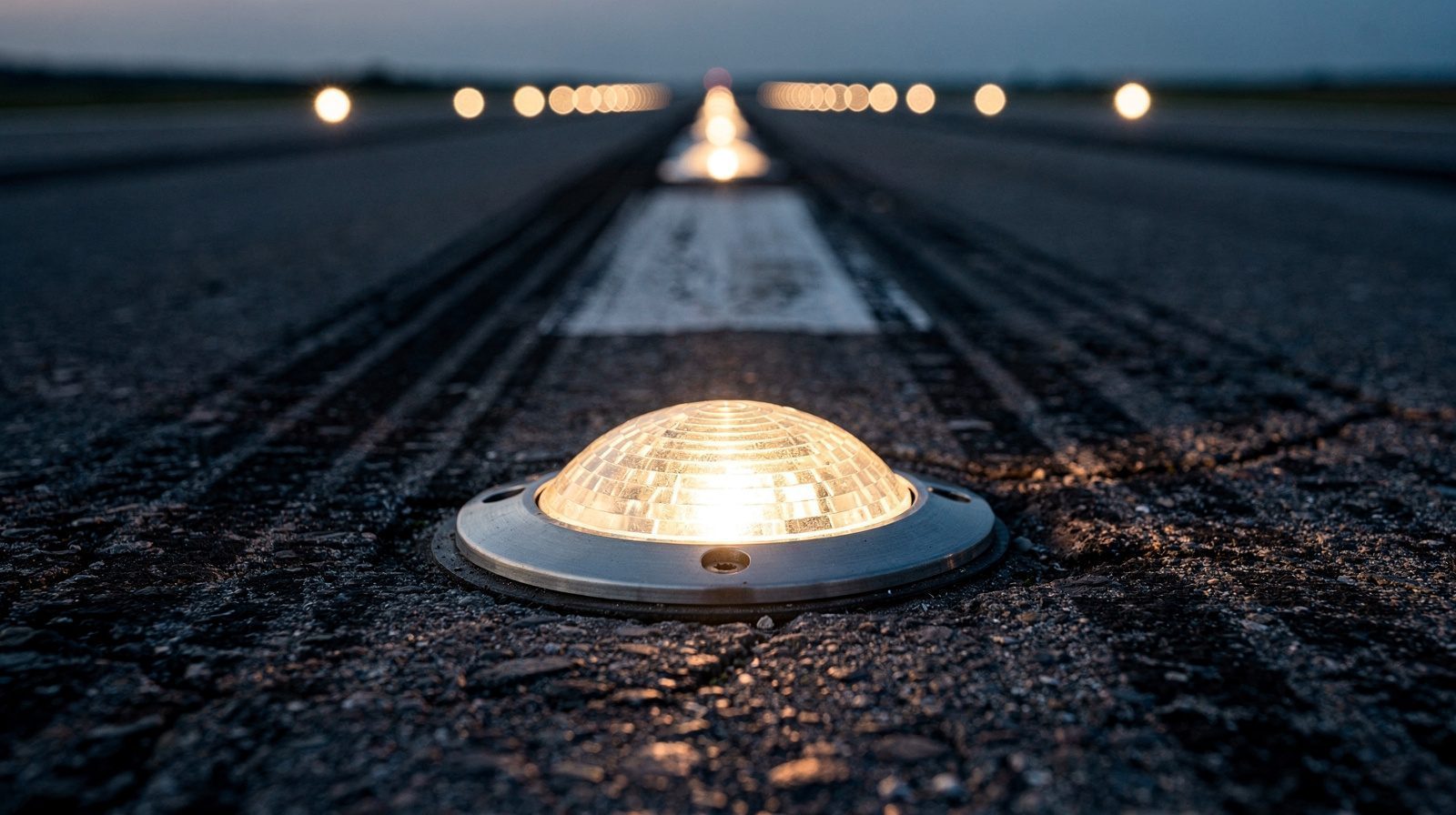
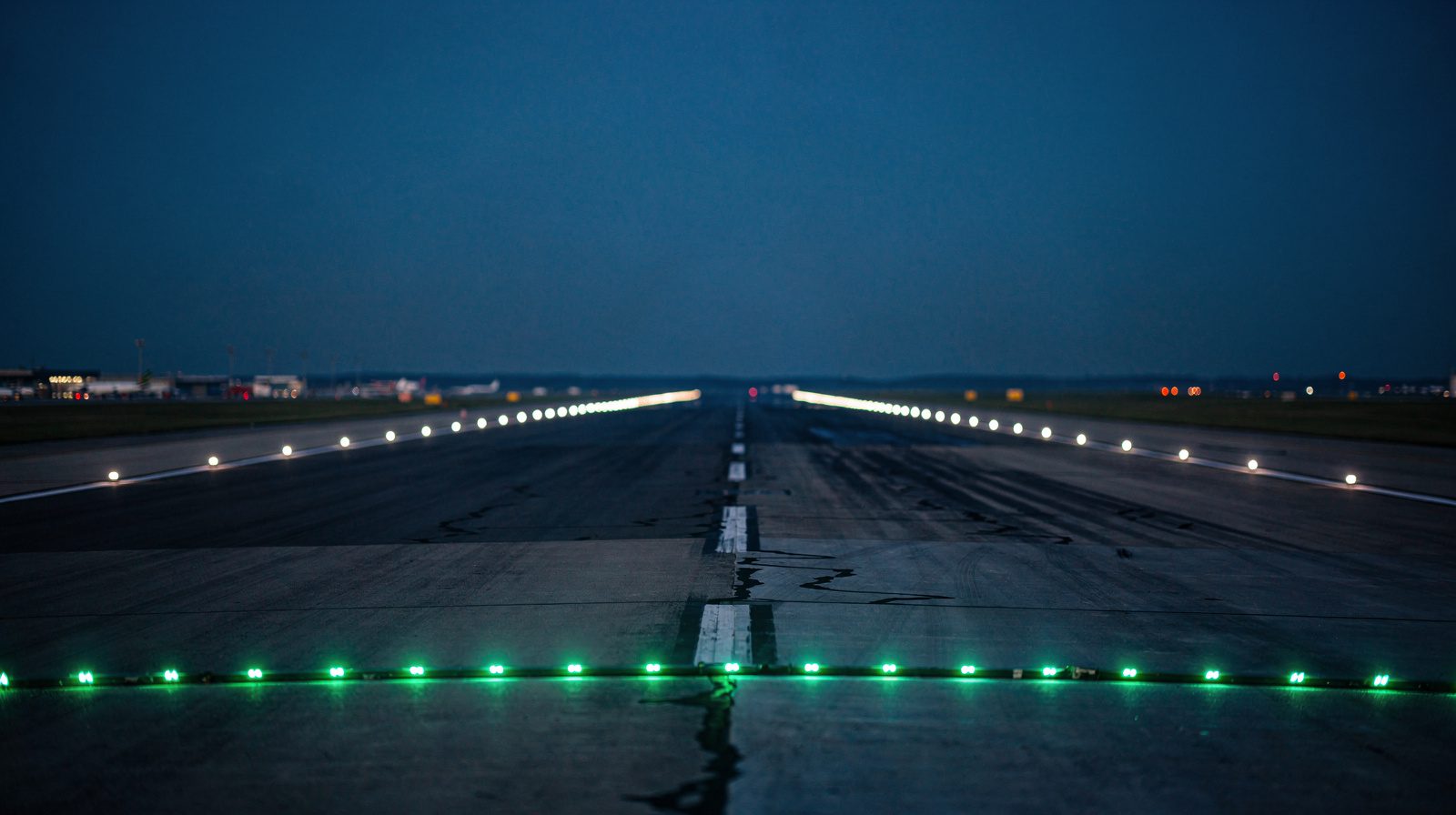
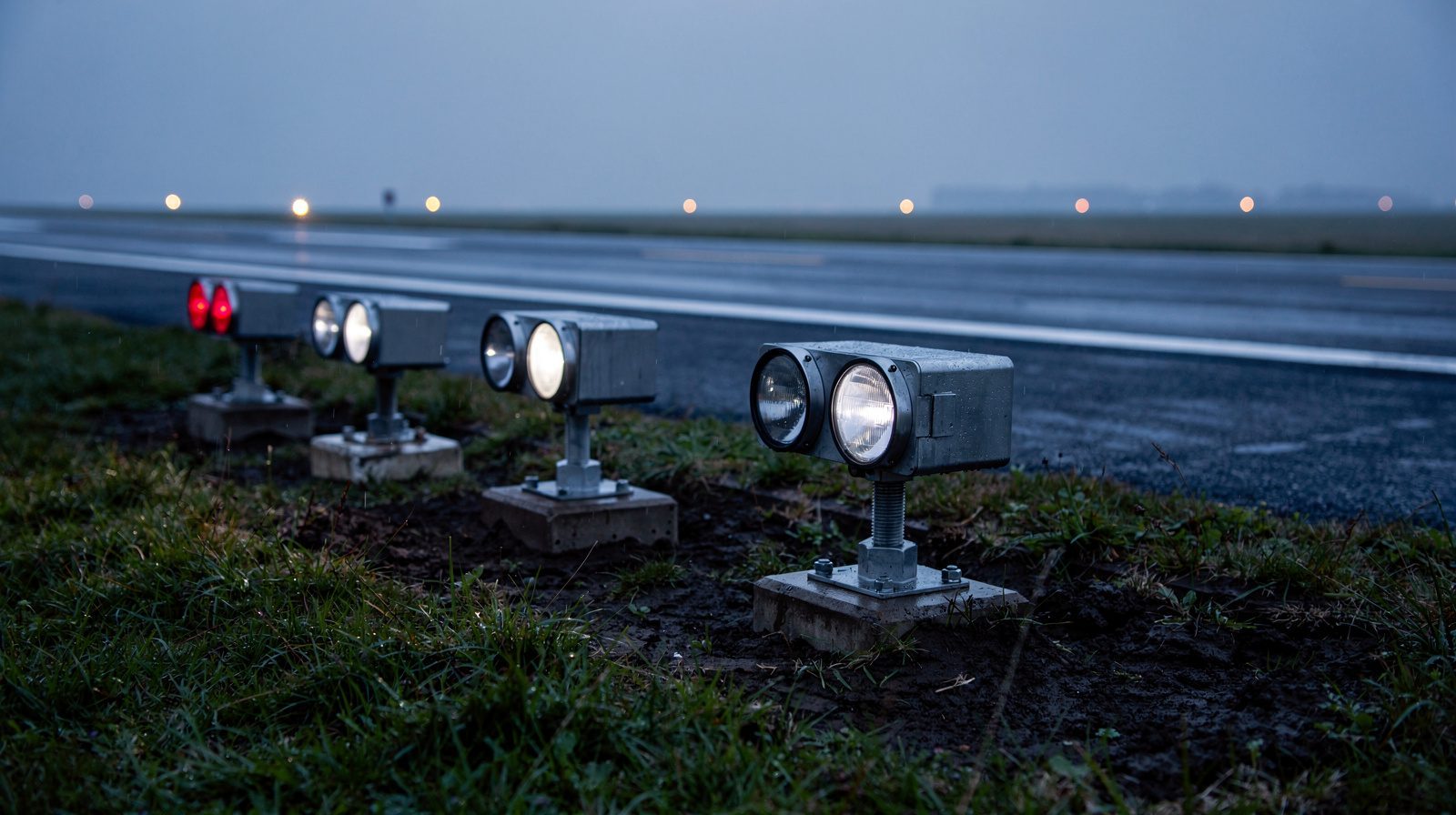
EASA guidance says that markings are also assessed during daylight flight checks. It says that an assessment of markings at night, compared with one in daylight, shows the reflectivity of the marking. It also says that night inspections check the illumination of signs. These passages are guidance material, not requirements.
TarmacView inspects airfield lighting with a drone. The drone operator must follow the day and night rules of the state where it flies. TarmacView does not decide which flight rules apply.
Frequently Asked Questions
- What is a daylight operation?
- A daylight operation is a flight made between sunrise and sunset. In the United States, 14 CFR 103.11 sets this limit for ultralight vehicles, with an exception for the 30 minutes before sunrise and after sunset.
- Except in Alaska, during what time period must position lights be lighted?
- From sunset to sunrise. 14 CFR 91.209(a) requires lighted position lights on an aircraft in that period. In Alaska, the period is longer. It also covers the time when a prominent unlighted object cannot be seen from 3 statute miles. It also covers the time when the sun is more than 6 degrees below the horizon.
- What is civil twilight in aviation?
- Civil twilight is the period when the centre of the sun is less than 6 degrees below the horizon. It starts at sunset and ends when the sun reaches 6 degrees. The US Naval Observatory uses this angle. EU rules put night between the end of evening civil twilight and the start of morning civil twilight.
- What does the FAA consider civil twilight outside Alaska?
- For small drones, 14 CFR 107.29(c) sets civil twilight at the 30 minutes before official sunrise and the 30 minutes after official sunset. In Alaska, the period is the one the Air Almanac publishes. 14 CFR 1.1 defines night by the Air Almanac civil twilight times.
- What rules apply to a drone flight in civil twilight?
- The drone needs anti-collision lighting that is visible for at least 3 statute miles. 14 CFR 107.29(b) requires this in civil twilight. The remote pilot must also pass the knowledge test or the training for night flight.
- Can a drone fly at night in the United States?
- Yes. 14 CFR 107.29 does not require daylight-only flight. For night flight, the remote pilot must pass the knowledge test or training. The drone needs anti-collision lighting visible for at least 3 statute miles.
- Can a small plane fly VFR at night in Europe?
- Only when the competent authority prescribes it. SERA.5005(c) says that VFR flights at night may be permitted under conditions. These include a flight plan when the aircraft leaves the aerodrome vicinity. They also include two-way radio when available and a ceiling of at least 450 m (1,500 ft).
- Does daylight matter for airfield inspection?
- Yes. Some visual aids look different by day and by night. EASA guidance includes markings in daylight flight checks. It says that night checks show the reflectivity of markings and the illumination of signs.
References
- usno-rst-defs
- Rise, Set, and Twilight Definitions US Naval Observatory
- eu-923-2012
- Commission Implementing Regulation (EU) No 923/2012 (SERA), Article 2 definitions and SERA.5005 Visual flight rules European Union
- ecfr-14-cfr-61-57
- 14 CFR 61.57, Recent flight experience: Pilot in command US Government Publishing Office (eCFR)
- ecfr-14-cfr-1-1
- 14 CFR 1.1, General definitions US Government Publishing Office (eCFR)
- ecfr-14-cfr-103-11
- 14 CFR 103.11, Daylight operations (ultralight vehicles) US Government Publishing Office (eCFR)
- ecfr-14-cfr-107-29
- 14 CFR 107.29, Operation at night (small unmanned aircraft) US Government Publishing Office (eCFR)
- ecfr-14-cfr-91-209
- 14 CFR 91.209, Aircraft lights US Government Publishing Office (eCFR)
- easa-ear-aerodromes
- Easy Access Rules for Aerodromes (Regulation (EU) No 139/2014), including CS-ADR-DSN Issue 7 EASA
- sk-aip-gen-2-2
- AIP Slovak Republic, GEN 2.2 Abbreviations used in AIS publications LPS SR
This is a reference entry. TarmacView provides drone inspection services and doesn't sell the equipment or materials described in this glossary.