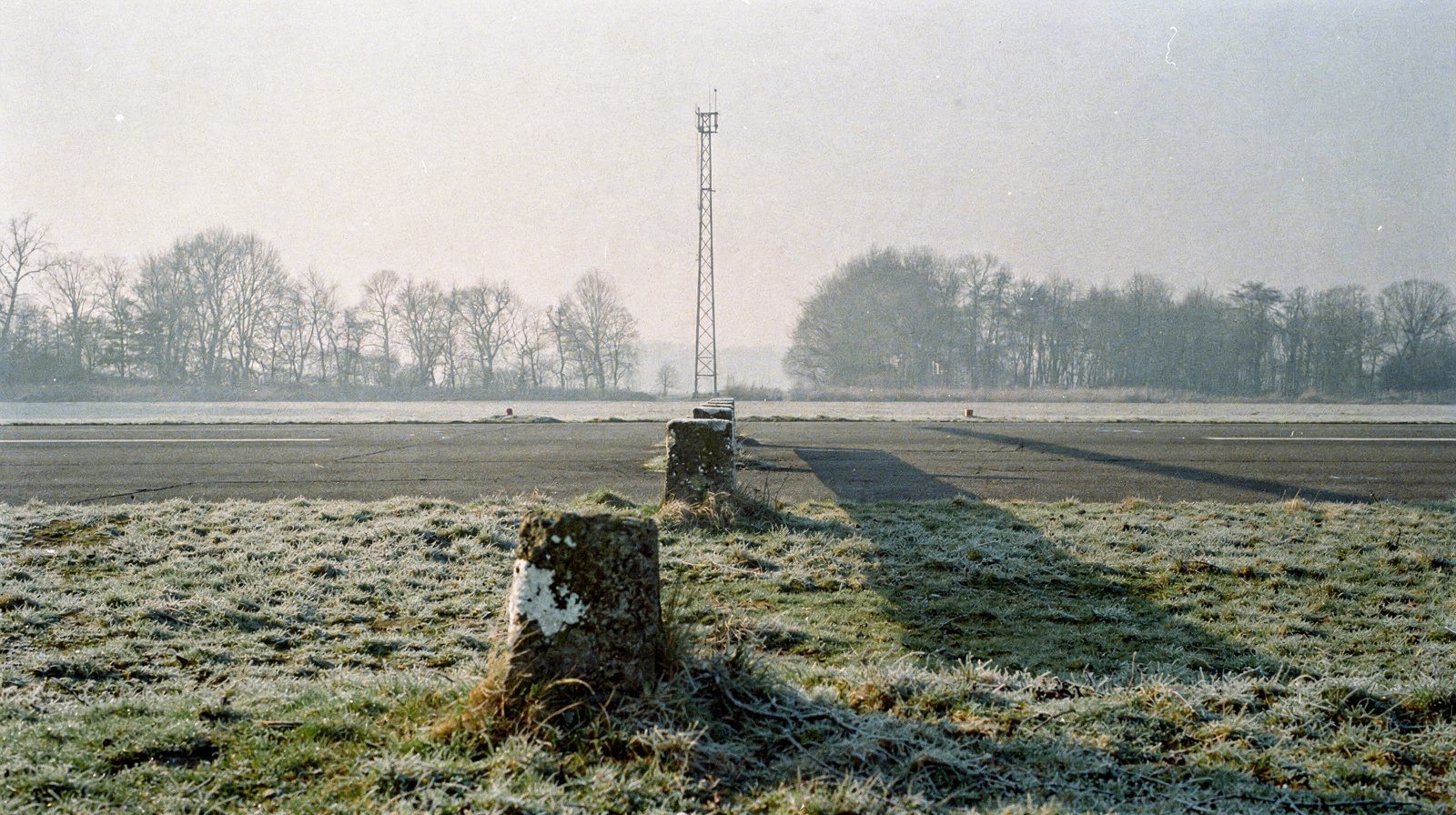
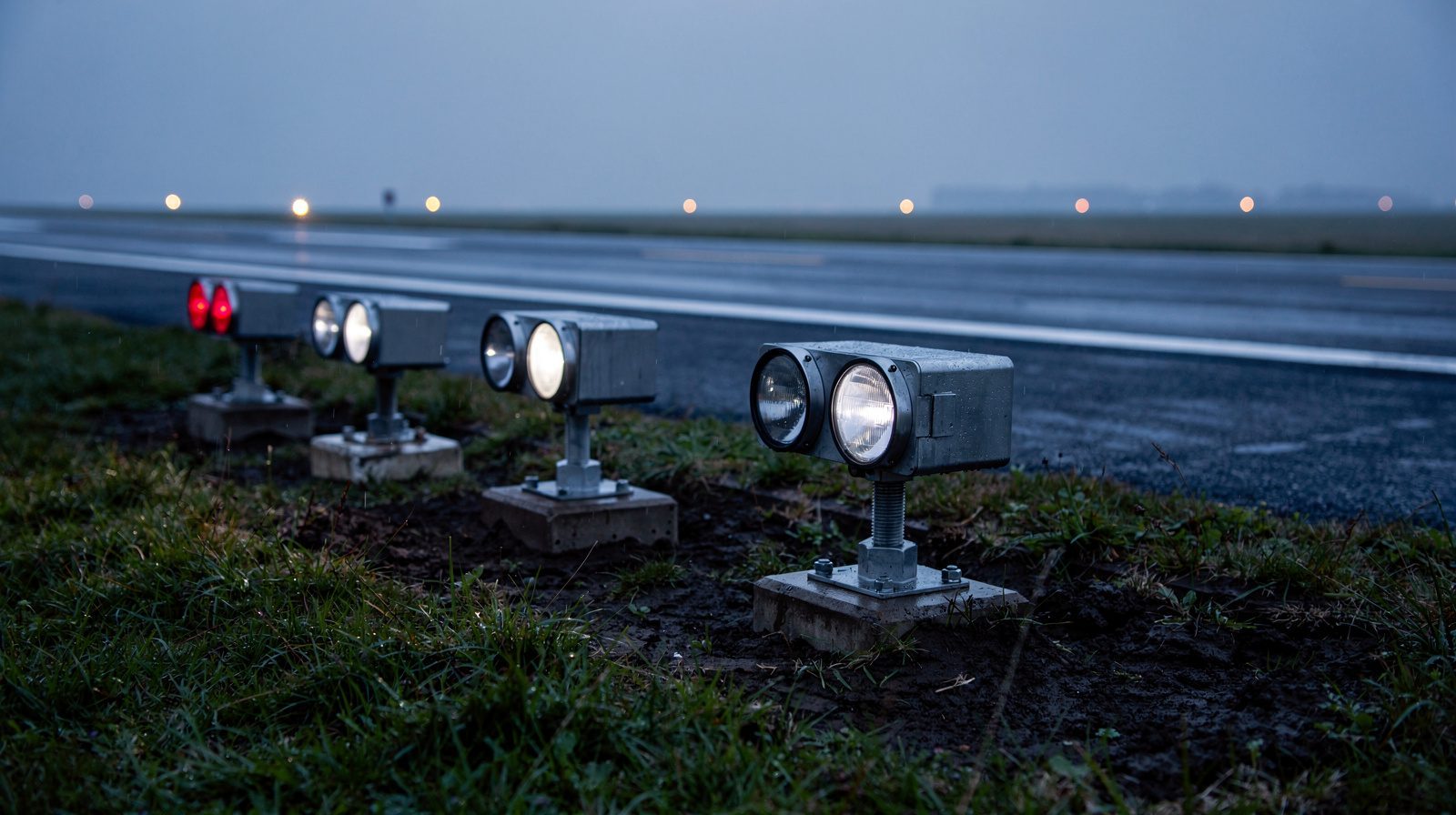
What is TODA (take-off distance available)?
Definition
The take-off distance available (TODA) is a declared runway distance that equals the take-off run available plus the length of any clearway. ICAO Annex 14 and Regulation (EU) No 139/2014 define it this way. ICAO and EASA spell it take-off. The FAA spells it takeoff, and its advisory circular lists the same distance as the takeoff distance available.
The take-off run available (TORA) is the length of runway declared available and suitable for the ground run of an aeroplane that takes off. A clearway is a defined rectangular area under the control of the appropriate authority. It is selected or prepared as a suitable area over which an aeroplane may make a portion of its initial climb to a specified height.
The distance is declared for one direction of a runway. The two directions of one runway can have different values.
How to calculate TODA
TODA = TORA + clearway length.
- No clearway. TODA equals TORA. With no stopway or clearway and the threshold at the runway extremity, the four declared distances normally equal the runway length. ICAO and EASA both say so.
- With a clearway. The clearway starts at the end of the TORA. Its length adds to TODA. If the clearway starts before the runway end, the TORA ends where the clearway starts. The part of the runway inside the clearway is not available for the take-off run (FAA AC 150/5300-13B, H.4.1 and H.4.2.1).
- In the FAA system, TODA can be shorter than the runway. Limiting the TODA is one way to keep an object out of the 40:1 instrument departure surface (AC 150/5300-13B, H.4.2). The TORA is then limited to the TODA, because TORA can never be longer than TODA.
EASA gives a table format for the values. In its example, runway 09 has a TORA of 2 000 m and a TODA of 2 580 m. The clearway length is the difference, 580 m. The same row shows an ASDA of 2 300 m and an LDA of 1 850 m. If a direction cannot be used, the table shows “NU” for not usable.
The four declared distances
Annex 14 requires the aerodrome to calculate four declared distances for a runway intended for international commercial air transport:
- TORA: the runway length available for the take-off ground run. See TORA .
- TODA: TORA plus the clearway.
- ASDA: TORA plus the stopway . See ASDA .
- LDA: the runway length declared available for the ground run of a landing aeroplane. See landing distance available .
A clearway changes only TODA. A stopway changes only ASDA. A displaced threshold changes only the LDA for approaches to that threshold, and the distances in the opposite direction stay the same. See also declared distances .
The FAA states the use of the four distances in the same way. TODA and TORA apply to take-off, ASDA applies to a rejected take-off, and LDA applies to landing.
Clearway limits
TODA can be only as long as the clearway allows. The rules for the clearway differ a little between the authorities:
- EASA and ICAO: the length should not be more than half the TORA. The width should be at least 75 m on each side of the extended runway centre line. The ground should not rise above a plane with an upward slope of 1.25 %. ICAO gives the 75 m for instrument runways. For non-instrument runways it gives half of the width of the runway strip.
- FAA: the clearway must be at least 500 ft (152 m) wide, symmetrical about the runway centre line. The length is no more than half the runway length. The clearway plane slopes up at no more than 1.25 % (80:1). The airport owner must have suitable control of the land under it.
An object on a clearway that may endanger aeroplanes in the air is an obstacle and should be removed (CS ADR-DSN.B.195 (f), Annex 14 3.6.6). The FAA allows one exception. Threshold lights no higher than 26 in (660 mm), placed off the runway sides, may protrude through the plane. A clearway is optional. The FAA says the ground under it need not be suitable for stopping an aircraft.
Why a clearway is provided
Annex 14, Attachment A, explains the idea. A runway with a clearway and a stopway can supply the balanced field length in less runway than a runway alone. The saving in runway is paid for with a longer overall length. If a stopway is not provided, the guidance sets the runway length from the accelerate-stop distance required and the landing distance required. The excess of the take-off distance required over that length may be provided as clearway.
The same section says that the length of a clearway cannot exceed half the length of the take-off run available. In the FAA system, a clearway can raise the allowable take-off weight without a longer runway.
How pilots use TODA
TODA is an upper limit for the take-off distance that the aeroplane needs. It is not a promise that the aeroplane can use all of it.
- EASA, performance class A. The take-off distance must not exceed the TODA, with a clearway distance not exceeding half of the TORA (CAT.POL.A.205 (b)(2)). The take-off run must not exceed the TORA, and the accelerate-stop distance must not exceed the ASDA. On a wet or contaminated runway, the take-off mass must not exceed the dry-runway mass.
- EASA, performance class B. The unfactored take-off distance, multiplied by 1.15, must not exceed the TODA when a clearway is available (CAT.POL.A.305 (b)).
- FAA. For turbine-powered aircraft, the TODA includes a clearway, if present. For airplanes certificated after 29 August 1959, 14 CFR 121.189 limits the take-off distance to the runway length plus the clearway. The clearway counted must not be more than half the runway length. The certified take-off distance is the greater of the engine-failure distance and 115 percent of the all-engine distance to 35 ft (14 CFR 25.113).
- Line-up. The declared distances do not account for the distance that the aeroplane needs to line up on the runway. EASA requires that this loss of runway length is taken into account (CAT.POL.A.205 (c)(6)). AMC1 CAT.POL.A.205 explains how to calculate it.
The FAA also says that obstacles in the departure area and aircraft performance can limit the usable TODA.
TODA and obstacle surfaces
The clearway moves the start of the take-off climb surface. In Annex 14 the inner edge of that surface sits at a specified distance beyond the runway end. If the clearway is longer than that distance, the surface starts at the end of the clearway. For code number 3 or 4, the specified distance is 60 m.
The FAA uses the TODA in the same way. For runways with published declared distances, the TODA marks the start of the instrument departure surface. The start of that surface therefore depends on the published TODA, not only on the runway end.
Take-offs from an intersection
A take-off does not always start at the runway end. The FAA says the start of take-off is most often at the beginning of the runway, but it may be farther along the runway. TORA, TODA and ASDA always start at the same place, and the airport declares them for that start.
EASA gives the datum line for an intersection take-off. The line follows the downwind edge of the taxiway that joins the runway, as GM1 ADR.OPS.A.005 shows in its figure. The EASA certificate form asks for the distances for each direction, including intersection take-offs where they apply.
Who publishes TODA
- EU. The aerodrome operator provides the declared distances, and they are reported to the aeronautical information services and air traffic services. The distances are to the nearest metre or foot.
- ICAO. Annex 14, section 2.8, requires the four distances for a runway for international commercial air transport.
- FAA. The airport owner provides the clearway and stopway lengths, if any, and the declared distances. They go into the Airport Master Record (FAA Form 5010) and the Chart Supplement, and into the Aeronautical Information Publication for international airports.
Where inspection fits
Annex 14 lists the clearway length and ground profile as aerodrome data. The aerodrome operator provides the declared distances for publication. A drone inspection does not set them.
An obstacle survey can still support the data. An object on the clearway that may endanger an aeroplane in the air is an obstacle under Annex 14 and CS ADR-DSN. CS ADR-DSN.B.195 (f) says that the operator should remove such an object.
Frequently Asked Questions
- What is TODA in aviation?
- TODA is the take-off distance available, a declared distance for one runway direction. It equals the take-off run available (TORA) plus the length of the clearway, if one is provided. ICAO Annex 14 and Regulation (EU) No 139/2014 define it this way.
- How do you calculate the take-off distance available?
- Add the clearway length to the TORA. If the runway has no clearway, TODA equals TORA. In the FAA system the TODA can also be shorter than the runway, for example to keep the 40:1 departure surface clear of an object.
- What do TORA, TODA, ASDA and LDA mean?
- They are the four declared distances for a runway direction. TORA is the take-off run available. TODA is TORA plus the clearway. ASDA is TORA plus the stopway. LDA is the landing distance available.
- What is the difference between TODA and TORA?
- TORA is the length of runway declared available for the ground run of an aeroplane that takes off. TODA is TORA plus the length of the clearway, if one is provided. Without a clearway, TODA equals TORA.
- Does TODA include a stopway?
- No. A stopway adds to the accelerate-stop distance available (ASDA), not to TODA. ASDA is TORA plus the stopway. TODA is TORA plus the clearway.
- How long can a clearway be?
- ICAO and EASA recommend that a clearway is not longer than half the TORA. The FAA requires that it is no more than half the runway length. A full-length clearway therefore makes TODA at most 1.5 times TORA.
- Can a pilot use the whole TODA?
- Not always. The take-off distance required must fit within TODA, and EASA counts a clearway of at most half the TORA. The FAA says obstacles in the departure area and aircraft performance can also limit the usable TODA.
- Where is TODA published?
- The aerodrome operator provides it for publication, for each runway direction. In the EU, the distances go to the aeronautical information services and air traffic services. In the US, the FAA Chart Supplement and the Airport Master Record carry them, and the Aeronautical Information Publication carries them for international airports.
References
- easa-ear-aerodromes
- Easy Access Rules for Aerodromes (Regulation (EU) No 139/2014), including CS-ADR-DSN Issue 7 EASA
- icao-annex-14-vol-i
- Annex 14 to the Convention on International Civil Aviation, Aerodromes, Volume I, 9th edition (July 2022) ICAO (copy hosted by the Swiss FOCA)
- faa-ac-150-5300-13b
- AC 150/5300-13B, Airport Design FAA
- easa-ear-air-ops
- Easy Access Rules for Air Operations, Annex IV (Part-CAT), Subpart C EASA
- ecfr-14-cfr-25-113
- 14 CFR 25.113 Takeoff distance and takeoff run US Electronic Code of Federal Regulations
- ecfr-14-cfr-121-189
- 14 CFR 121.189 Airplanes: Turbine engine powered: Takeoff limitations US Electronic Code of Federal Regulations
This is a reference entry. TarmacView provides drone inspection services and doesn't sell the equipment or materials described in this glossary.