What is a Relocated Threshold?
Relocated Threshold
Definition
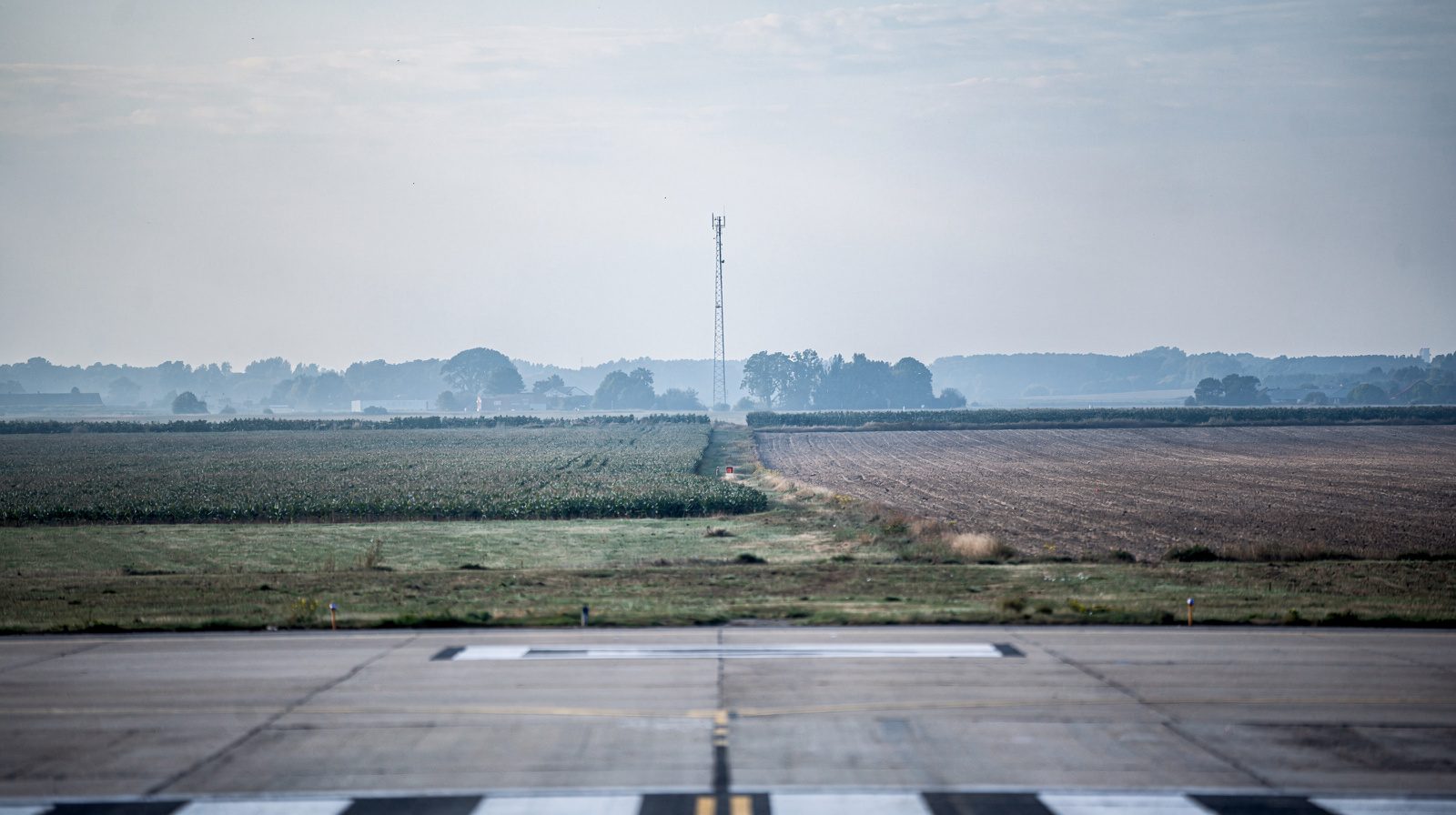
A relocated threshold is a runway threshold that is moved toward the rollout end of the runway and closes the pavement behind it.
The FAA Aeronautical Information Manual (AIM, 2-3-3) uses the term. It says that construction, maintenance or other activities can require the relocation. The runway threshold is the beginning of the part of a runway that is usable for landing. The runway threshold page covers where a threshold stands and compares the two cases in one table. This page covers the relocation itself.
Why a threshold is relocated
The AIM names construction, maintenance and “other activities” as causes. The duration varies from a few hours to several months.
The EU rules treat works at the aerodrome as a managed process. The aerodrome operator must have a procedure for the planning, the safety assessment, the authorisation and the promulgation of the works. It must also have a procedure for reduced runway length operations (ADR.OPS.B.070(c) and (d)). FAA guidance asks for the declared distances for each construction phase, and for the available runway length (AC 150/5370-2G, 2.6.1).
Relocated and displaced thresholds
A displaced threshold keeps the pavement behind it in use. A relocated threshold does not. AC 150/5370-2G, 2.7.1.1, puts it this way:
- Partially closed runway. A portion of the pavement is unavailable for any aircraft operation. Taxiing, landing and take-off are prohibited on it in either direction.
- Displaced threshold. It is set to give obstacle clearance and a safety area for landing aircraft. The pavement before it is normally available for take-off in the direction of the displacement. It is also available for landing and take-off in the opposite direction.
The AIM says that an operator who reports a relocation or a displacement should avoid language that confuses the two. The FAA warns that a wrong NOTAM can cause a hazardous situation. The displaced threshold page covers the second case.
During works, a runway can have a temporary displaced threshold instead of a closure. The test is the same. If the pavement behind the threshold is still usable, it is a displacement.
Where the closed part ends
The closed portion of a partially closed runway generally runs from the threshold to a taxiway. Aircraft use that taxiway to enter and leave the runway. If it ends between taxiways, pilots must back-taxi on the runway. The FAA calls this undesirable (AC 150/5370-2G, 2.7.1.1.1). A temporary displaced threshold does not need a taxiway at its location, because the pavement behind it stays in use (2.7.1.1.2).
Effect on the distances
A relocation closes a set portion of the approach end. It also shortens the runway in the opposite direction (AIM 2-3-3). The AIM says that the NOTAM should name the closed portion.
The FAA says that a temporary use of declared distances, partial runway closures or both can give the runway safety area needed during works. The operator coordinates with the FAA so that the declared distances are published and a NOTAM is issued (AC 150/5370-2G, 2.22.1.1). The AIM gives a NOTAM example that names the closed length: 10/28 W 900 CLSD.
Markings
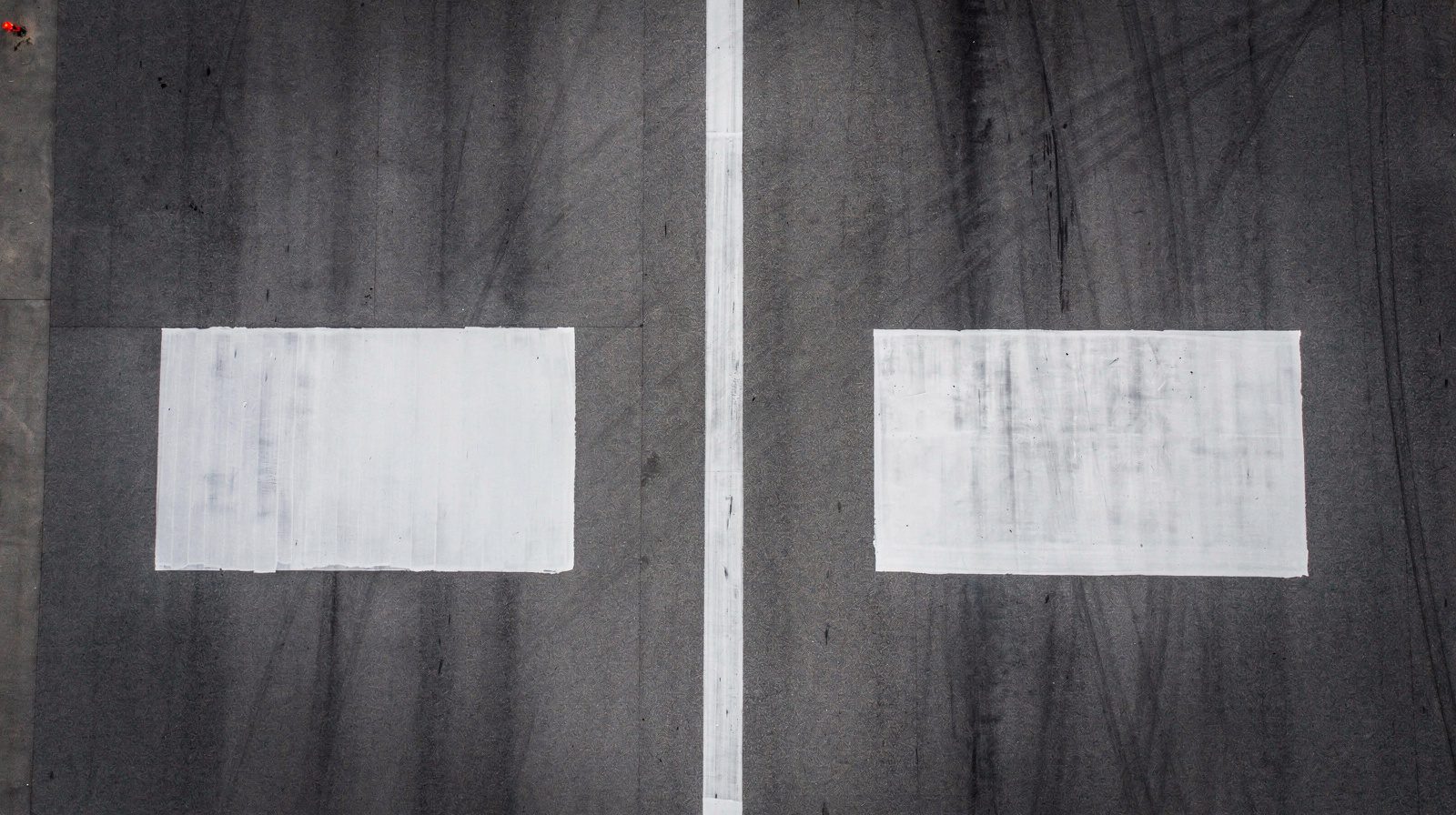
The AIM says that the methods of identifying the new threshold vary with the duration of the work. One common practice is a white threshold bar 3 m (10 ft) wide across the runway. The runway markings between the old and the new threshold may or may not be removed or covered.
For construction, AC 150/5370-2G gives these rules for a partially closed runway (2.18.2.1.3):
- Mark the temporary beginning of the runway with a runway threshold bar and the runway designation.
- Mark the closed pavement with yellow chevrons. They show pavement that is unsuitable for take-off or landing.
- Obliterate or cover the markings before the moved threshold. The aiming point marking is also obliterated.
- Touchdown zone markings beyond the moved threshold may stay.
- Issue NOTAMs for any nonstandard marking.
- Do not use an X on a partially closed runway.
The EU guidance covers a runway that returns to temporary use during resurfacing. The location of the temporary threshold is identified by a 3.6 m wide transverse stripe (AMC1 ADR.OPS.B.070(c)(5), point (c)(3)). ICAO Annex 14 recommends a closed runway marking on a temporarily closed portion. The marking may be omitted when the closure is short and air traffic services give adequate warning. It stands at each extremity of the closed portion, with at most 300 m between markings (7.1.2.2, 7.1.2.3).
Lights and visual aids
The FAA gives these rules for a partially closed runway (AC 150/5370-2G, 2.18.3.3):
- Approach lights. Place the approach lighting system at the affected end out of service.
- Edge and threshold lights. Disconnect the lights on the closed part. Alternatively, cover the fixtures so that no light leaks (2.18.3.3.1).
- New threshold. Light it if the runway is lighted. This applies when the threshold is intended for night landings or instrument meteorological conditions (2.18.3.3.3).
- Unlighted runway. Retroreflective elevated markers can mark the new threshold. They are green for aircraft on approach and red at the rollout end (2.18.3.3.4).
- Temporary fixtures. Install them outboard of the full-strength pavement only when they cannot stand on it. Keep the bases at grade, and no more than 7.6 cm (3 in) above ground (2.18.3.3.5).
- Colour and spacing. Keep the standards of AC 150/5340-30 for threshold and edge lights (2.18.3.3.6).
- Visual glide slope indicators. Relocate the indicator, such as a PAPI, to mark the temporary threshold. Do the same for the runway end identifier lights (REIL) and the approach lights. The other option is to disable any equipment that gives a false threshold position (2.18.3.3.8).
- NOTAM. Issue a NOTAM about the temporary lighting (2.18.3.3.9).
ICAO says that the lighting of a closed runway or closed portion must not be operated, except for maintenance. This includes the approach lighting (7.1.1.2). Where a closed portion meets a runway or taxiway that is usable at night, unserviceability lights stand across the entrance. The interval is at most 3 m (7.1.1.3). For a temporarily displaced threshold, ICAO recommends a PAPI where the conditions for one apply (5.3.5.6). The FAA also lists the PAPI among the aids to relocate or disable.
Return to normal use
When the work ends, the aerodrome operator inspects the affected areas before the runway returns to use. The inspection covers pavements, signs, lights and markings. It also covers foreign objects and surface contaminants such as dirt and sand. The operator cancels the NOTAMs that apply (AMC1 ADR.OPS.B.070(c)(5), point (b)). An inspection of the threshold and runway end lights after the work checks that each unit lights again and shows the right colour. TarmacView’s threshold and runway end lights inspection counts every unit in each bar and checks its colour.
Frequently Asked Questions
- What is a relocated threshold?
- A relocated threshold is a runway threshold that is moved toward the rollout end of the runway and closes the pavement behind it. The FAA uses this term in the Aeronautical Information Manual. Construction or maintenance work usually causes it.
- What is the difference between a displaced threshold and a relocated threshold?
- The pavement before a displaced threshold stays open for take-off and for landing from the opposite direction. The pavement before a relocated threshold is closed to all aircraft. A relocated threshold also shortens the runway for the opposite direction.
- How long does a relocated threshold last?
- It lasts from a few hours to several months. The FAA AIM gives this range. The length of the work decides how the new threshold is marked.
- What do the markings of a relocated threshold look like?
- A common practice is a white threshold bar 3 m (10 ft) wide across the runway at the new threshold. FAA construction guidance adds the runway designation and yellow chevrons on the closed pavement. It says to remove or cover the markings before the new threshold, and not to use an X.
- Are the runway lights on at a relocated threshold?
- The runway lights between the old and the new threshold are not lit. The FAA says to disconnect or cover the edge and threshold lights on the closed part. If the runway is lit and the new threshold is for night or instrument landings, the new threshold must be lit.
- Does a relocated threshold change the landing distance?
- Yes. The runway is shorter for landing on the relocated end. It is also shorter for the opposite direction, because the closed pavement is no longer available to any aircraft. The operator publishes the closed length in a NOTAM.
- Is a relocated threshold an ICAO or EASA term?
- No. ICAO Annex 14 speaks of a threshold displaced temporarily and of a closed portion of a runway. EASA speaks of a temporary threshold. The word relocated comes from the FAA. FAA construction guidance calls the closed part a partially closed runway.
References
- faa-aim-2-3
- Aeronautical Information Manual, Chapter 2, Section 3: Airport Marking Aids and Signs FAA
- faa-ac-150-5370-2g
- AC 150/5370-2G, Operational Safety on Airports During Construction FAA
- icao-annex-14-vol1
- Annex 14 to the Convention on International Civil Aviation, Aerodromes, Volume I, Aerodrome Design and Operations, Ninth Edition (July 2022, consolidated with later amendments) ICAO
- easa-ear-aerodromes
- Easy Access Rules for Aerodromes (Regulation (EU) No 139/2014), including CS-ADR-DSN Issue 7 EASA
This is a reference entry. TarmacView provides drone inspection services and doesn't sell the equipment or materials described in this glossary.