What is a Steady-Burning Light?
Definition
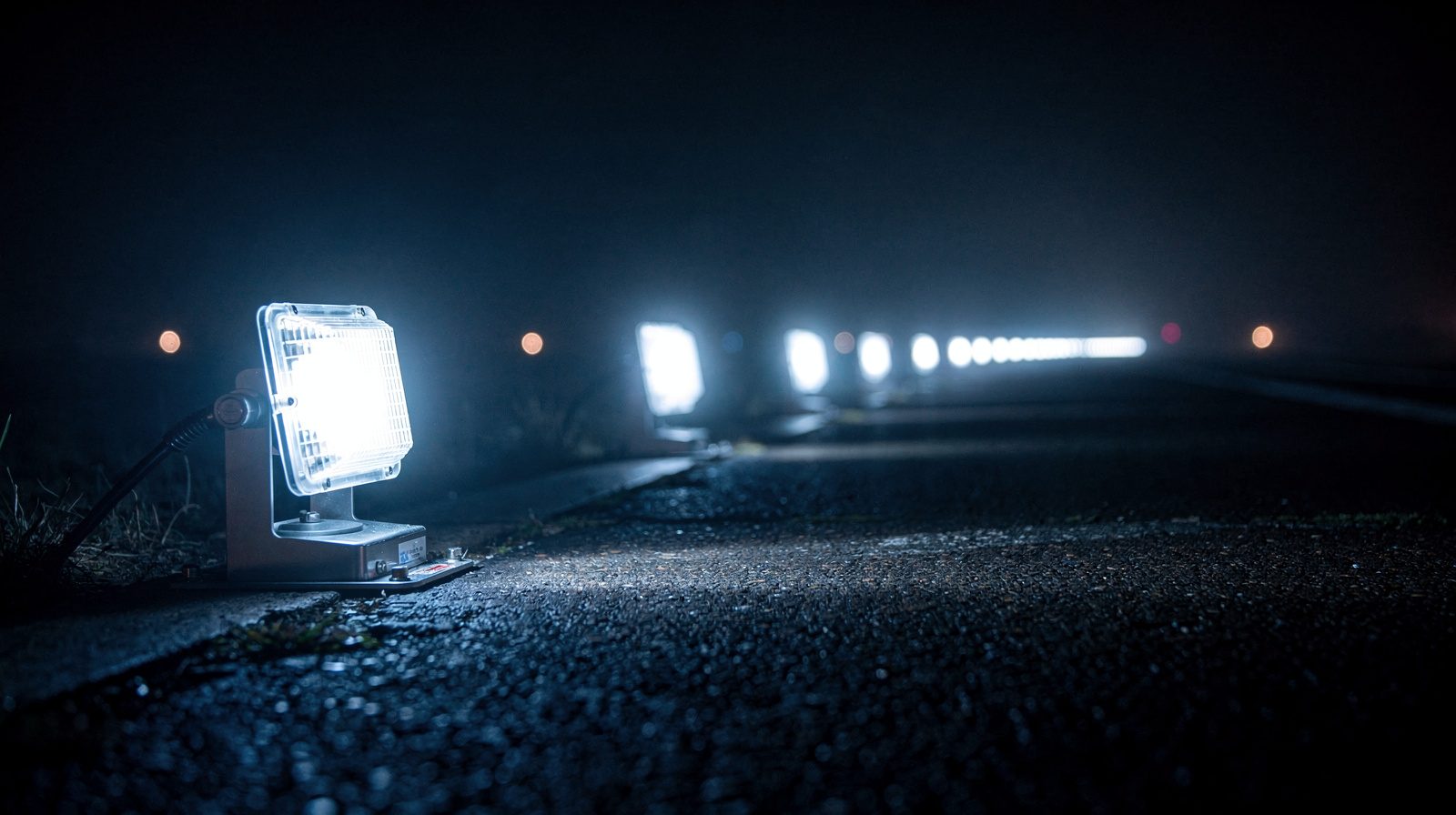
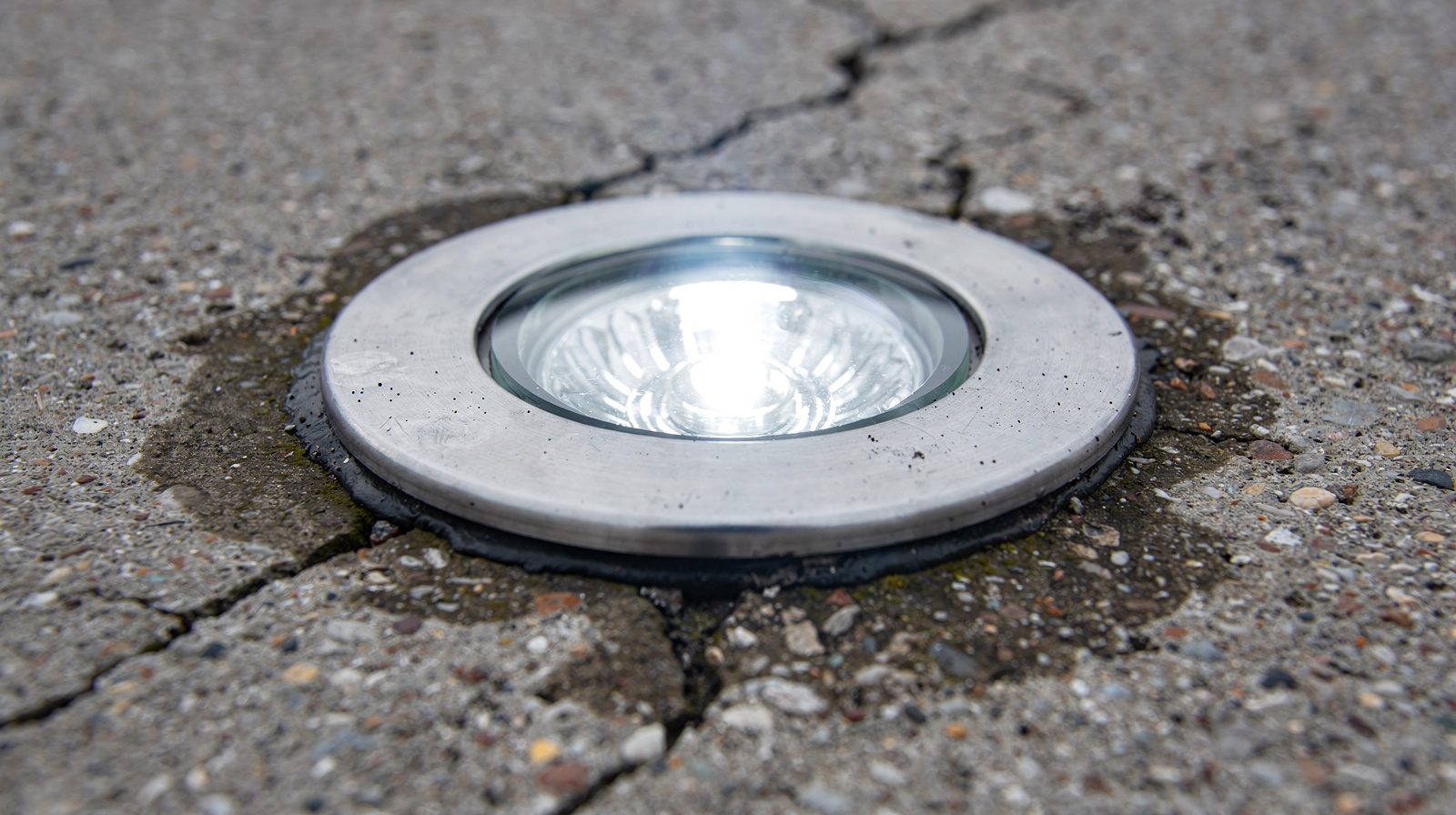
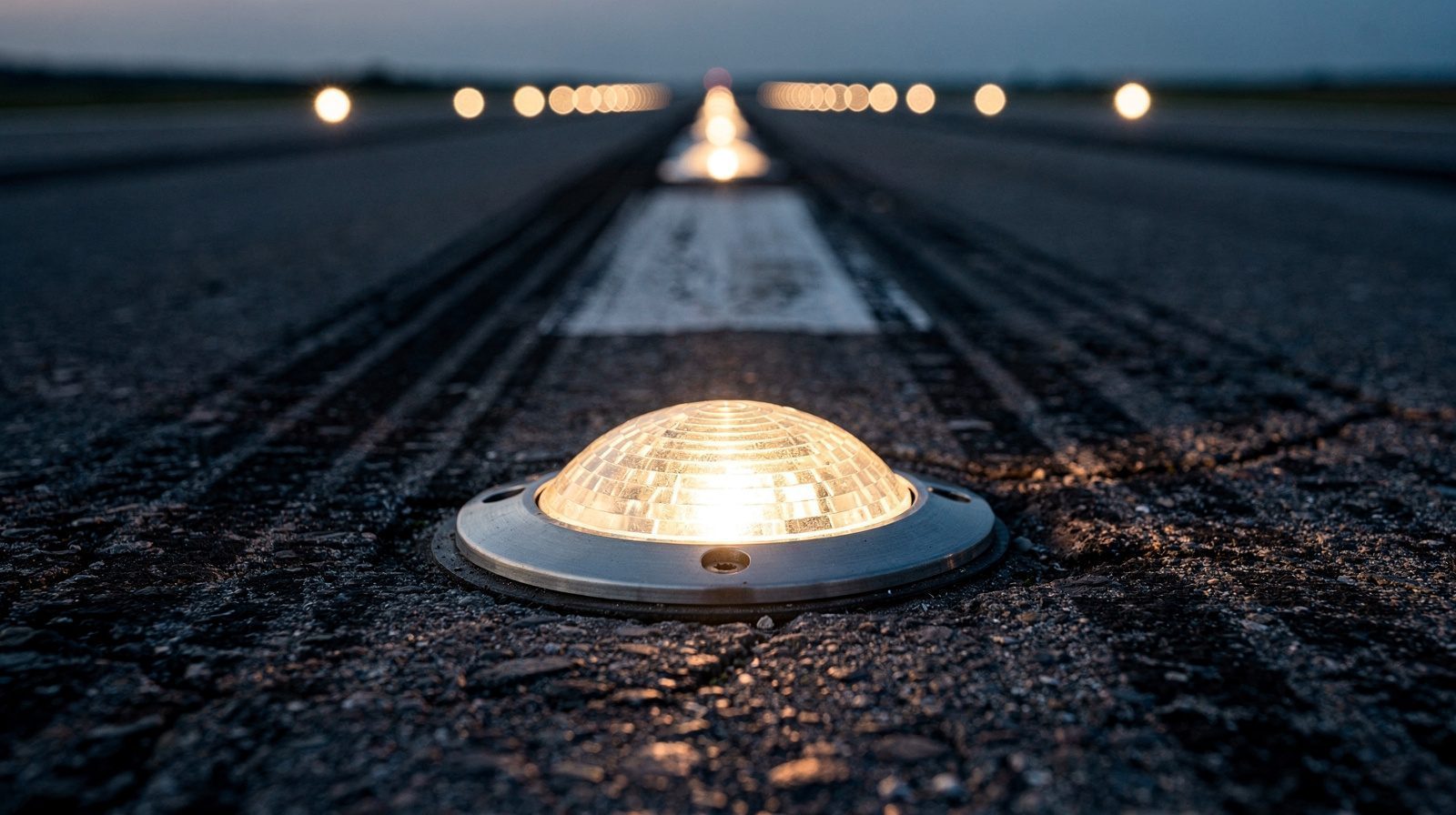
A steady-burning light is a light that shines with constant intensity and does not flash. ICAO, EASA and the FAA define it the same way: a light with constant luminous intensity when observed from a fixed point. ICAO and EASA call it a fixed light. The FAA uses both names in its documents.
A flashing light is the opposite case. Its intensity is an effective intensity. That is the intensity of a fixed light of the same colour that gives the same visual range. See flashing light for how flash rate and duration set it.
Which name is used where
The three authorities use the same definition, but the name differs by document:
- ICAO Annex 14 and EASA CS-ADR-DSN say fixed light.
- The FAA equipment specification AC 150/5345-43J says steady-burning (fixed) light.
- The FAA Aeronautical Information Manual (AIM) says steady-burning for touchdown zone, taxiway centerline, clearance bar and stop bar lights.
The FAA also uses the words pulse and pulsating. In-pavement runway guard lights pulse, and a pulsating visual approach slope indicator pulsates. In both cases the intensity is not constant, so this page counts them as flashing lights.
Where airfield standards specify fixed lights
CS-ADR-DSN specifies these fixed lights:
- Runway edge lights, showing variable white. The spacing is not more than 60 m on an instrument runway.
- Runway threshold and wing bar lights, showing green.
- Runway end lights, showing red.
- Taxiway edge lights, showing blue.
ICAO Annex 14 sets the same colours. It allows a spacing of up to 100 m on a non-instrument runway. Fixed light lists the full set with the paragraph of each rule.
The FAA AIM describes these lights as steady-burning:
- Touchdown zone lights, white.
- Taxiway centerline lights, green.
- Clearance bar lights, three yellow in-pavement lights at a holding position.
- Stop bar lights, red. See stop bar .
Approach lighting systems can mix both types. The FAA MALSF has steady-burning green threshold lights and steady-burning white centerline bars. It also has three sequenced flashing lights at the outermost bars.
Steady-burning obstacle lights
EASA and ICAO list low-intensity obstacle lights Type A and Type B as red and fixed. The minimum peak intensity at night is 10 cd for Type A and 32 cd for Type B. CS ADR-DSN.Q.847 recommends Type A or B for a less extensive object that is less than 45 m above ground. Medium-intensity obstacle lights Type C are also red and fixed, at 2 000 cd at night. See obstacle light for the full set of types.
The FAA type for a steady-burning red obstruction light is the L-810. It has a minimum intensity of 32.5 candela over a vertical beam spread of 10 degrees, at all radials through 360 degrees.
An L-810 is not an ICAO or EASA light type. The ICAO and EASA types are Type A and Type B. Their intensity values (10 cd and 32 cd) are not the same as the FAA value of 32.5 cd.
Steady or flashing obstacle lights
An obstacle lighting system can use steady lights, flashing lights or both. The rules differ by authority.
ICAO and EASA recommend low-intensity Type A or B for a less extensive object below 45 m. They recommend medium-intensity Type A, B or C for an extensive object. A medium-intensity Type A is a flashing white light. Types B and C are red, and Type B flashes while Type C is fixed.
A flashing white light at night can dazzle pilots within about 10 000 m of an aerodrome. In that case ICAO and EASA recommend a dual system. It uses the flashing white light by day and in twilight. At night it uses a medium-intensity Type B or C red light (Annex 14 6.2.3.18, GM1 ADR-DSN.Q.846 (c)).
FAA AC 70/7460-1M sets the use by structure type and height:
- On a pole, tower or other skeletal structure of 150 ft (45.72 m) AGL or less, the top has L-810 lights. Intermediate levels have two or more steady-burning lights.
- On a skeletal structure above 150 ft, the top uses L-864 flashing lights. Intermediate levels do not need steady-burning lights.
- On a chimney or similar solid structure, the top has L-810 lights up to 150 ft and at least three L-864 lights above it. A structure between 150 ft and 350 ft has a second level of steady-burning lights at about the midpoint.
Flash rates for comparison
A steady-burning light has no rate. Flashing lights do, and the rate is part of how a pilot tells one light from another. Annex 14 and CS-ADR-DSN give these rates:
| Light | Rate | Reference |
|---|---|---|
| Aerodrome beacon | 20 to 30 flashes per minute in total | Annex 14 5.3.3.6, CS ADR-DSN.M.620 |
| Runway threshold identification lights (Recommendation) | 60 to 120 flashes per minute | Annex 14 5.3.8.3, CS ADR-DSN.M.670 (c)(1) |
| Sequenced flashing lights of a precision approach system | Twice a second | Annex 14 5.3.4.18 and 5.3.4.35, CS M.630 (c)(7), M.635 (c)(6) |
| Runway guard lights | 30 to 60 cycles per minute | Annex 14 5.3.23.19, CS ADR-DSN.M.745 (c)(12) |
| Closed runway lights | One second on and one second off | Annex 14 7.1.4.4 |
| Medium-intensity obstacle lights Type A and B | 20 to 60 flashes per minute | Annex 14 Table 6-1, CS Table Q-1 |
| High-intensity obstacle lights Type A and B | 40 to 60 flashes per minute | Annex 14 Table 6-1, CS Table Q-1 |
| Low-intensity obstacle lights Type C and D (vehicles) | 60 to 90 flashes per minute | Annex 14 Table 6-1, CS Table Q-1 |
The FAA sets one rate for each obstruction light type in AC 150/5345-43J Table 3-5:
| FAA type | Description | Rate |
|---|---|---|
| L-810 | Steady-burning red | None |
| L-810 (F) and L-864 | Flashing red | 30 FPM (plus or minus 3) |
| L-856 and L-865 | Flashing white, high intensity (L-856) and medium intensity (L-865) | 40 FPM |
| L-857 and L-866 | Flashing white, high intensity (L-857) and medium intensity (L-866) | 60 FPM |
| L-885 | Flashing red | 60 FPM |
Annex 14 gives the runway guard light rate as 30 to 60 cycles per minute. It notes that configuration A on a 6.6 ampere series circuit looks best at 45 to 50 flashes per minute per lamp. The FAA requires 30 to 32 flashes per minute for in-pavement runway guard lights (AC 150/5340-30J 4.8.6.2.5). See runway guard light and sequenced flashing lights for the two systems.
When a flasher fails
A flashing system can fail back to a steady light. Two rules say so:
- FAA AC 150/5345-43J requires that a failure of the flashing circuit makes flashing red obstruction lights (L-864 and L-810 (F)) operate as steady-burning lights.
- ICAO Annex 14 requires that closed runway lights, which flash, revert to fixed lights if the flashing system fails (7.1.4.5).
A steady light where the design calls for a flash is therefore a sign of a fault. The pilot still sees the light, but the flash pattern that marks it as a closed runway or a tall structure is lost.
Serviceability of a steady-burning light
A steady-burning light that is dark is a failed light. ICAO deems a light unserviceable when its main beam average intensity is below 50 per cent of the value in Appendix 2 (Annex 14 10.5.1). EASA says the same in ADR.OPS.C.015 (c)(1) and adds a missing, damaged or wrong-colour filter (c)(2).
The rule also sets a share of lights that must work. For a Category I precision approach runway, the objective is that all approach and runway lights are serviceable. In any event at least 85 % of the lights must work in each of these groups: approach, threshold, runway edge and runway end. An unserviceable light may not be next to another one, unless the light spacing is significantly less than required (ADR.OPS.C.015 (b)(6)).
The aerodrome operator decides what a dark light means for the runway.
Frequently Asked Questions
- What does a steady light mean in aviation?
- A steady light is a light that shines with constant intensity and does not flash. On an airfield it marks a fixed position, such as a runway edge. A tower light signal is a separate case. Under 14 CFR 91.125 a steady green light means cleared for takeoff on the surface, and cleared to land in flight. A steady red light means stop on the surface, and give way and continue circling in flight.
- Is a steady-burning light the same as a fixed light?
- Yes. ICAO and EASA use the term fixed light. The FAA uses steady-burning (fixed) light in its equipment specification. All three give the same definition: constant luminous intensity when observed from a fixed point.
- What is the difference between a fixed light, a steady-burning light and a pulsed light?
- A fixed light and a steady-burning light are the same thing. A flashing light switches on and off at a set rate. The FAA also says pulse for in-pavement runway guard lights, and pulsating for a pulsating visual approach slope indicator. In both cases the intensity is not constant.
- What flash rate do airfield lights use?
- The rate depends on the light. The aerodrome beacon gives 20 to 30 flashes per minute in total. Medium-intensity obstacle lights Type A and B give 20 to 60 per minute, and high-intensity Type A and B give 40 to 60 per minute. Runway guard lights give 30 to 60 cycles per minute. Sequenced flashing lights flash twice a second. The tables in this page give the source of each value.
- What is an L-810 light?
- An L-810 is the FAA type for a steady-burning red obstruction light. FAA AC 150/5345-43J requires at least 32.5 candela over a vertical beam spread of 10 degrees, at all radials through 360 degrees. ICAO and EASA do not use the name L-810.
- Which airfield lights are steady-burning?
- CS ADR-DSN makes runway edge, threshold, end and taxiway edge lights fixed lights. Low-intensity obstacle lights on fixed objects are also fixed and red. Some lights flash where the standard asks for it, for example the sequenced flashing lights in the outer part of an approach lighting system.
- What happens when the flasher of a flashing red obstruction light fails?
- The lights operate as steady-burning lights. FAA AC 150/5345-43J requires this for flashing red obstruction lights (L-864 and L-810 (F)). A light that stays steady where the design calls for a flash can point to a fault in the flashing circuit.
References
- easa-ear-aerodromes
- Easy Access Rules for Aerodromes (Regulation (EU) No 139/2014), including CS-ADR-DSN Issue 7 EASA
- icao-annex-14-vol-i
- Annex 14 Aerodromes, Volume I, 9th edition, July 2022 ICAO (copy hosted by the Swiss Federal Office of Civil Aviation)
- faa-ac-150-5345-43j
- AC 150/5345-43J, Specification for Obstruction Lighting Equipment FAA
- faa-ac-70-7460-1m
- AC 70/7460-1M, Obstruction Marking and Lighting FAA
- faa-ac-150-5340-30j
- AC 150/5340-30J, Design and Installation Details for Airport Visual Aids FAA
- ecfr-14-cfr-91-125
- 14 CFR 91.125 ATC light signals FAA, through the Electronic Code of Federal Regulations
This is a reference entry. TarmacView provides drone inspection services and doesn't sell the equipment or materials described in this glossary.