What is a Periodic Flight Inspection?
Periodic Flight Inspection
A periodic flight inspection is a regularly scheduled flight that checks that a commissioned navigation aid or procedure still meets its standards.
The FAA order that sets the rules defines it in one line. A periodic inspection is “a regularly scheduled flight inspection to determine that the system meets standards and supports the operational requirements”. It is one of five types. The others are site evaluation, commissioning, special and surveillance. The flight inspection page covers all five types and how a mission runs. This page covers only the recurring type and its schedule.
Why the flight is repeated
ICAO Annex 10, Volume I, Standard 2.2.1, covers the radio navigation aids of the types in its Chapter 3. It says that they must have periodic ground and flight tests. A Note to the Standard sends the reader to Attachment C and to ICAO Doc 8071 for the periodicity. The Annex does not give one number for every aid.
The FAA schedule
The FAA sets the intervals in Table 4-1 of Order 8200.1D. All intervals are in days.
| Facility or procedure | Interval | In months |
|---|---|---|
| ILS, LDA or SDF with a glide slope | 540 | about 18 |
| Localizer clearances at the localizer service area | 1,080 | about 36 |
| GBAS | 540 (360 at first) | about 18 |
| Standard instrument approach procedure (SIAP) | 540 | about 18 |
| Approach obstacle assessment | 540 | about 18 |
| VOR, VORTAC or TACAN that supports a procedure | 540 | about 18 |
| Marker beacons, VGSI, approach lighting systems | The interval of the system or procedure they support |
Military, foreign and other special systems may have their own intervals. The order also says to inspect more often when the owner asks or when the need is clear.
Commissioning steps and the first periodic
A new precision facility does not start at the 540-day interval. The order inspects a newly commissioned precision facility at 90, 180 and 270 days, and then keeps the Table 4-1 schedule. A newly commissioned GBAS starts at 360 days. After two periodic cycles with no out-of-tolerance condition, the interval may rise to 540 days. An out-of-tolerance condition during the 540-day interval resets it to 360 days.
A reconfigured precision approach service is checked at 90 days, and the next periodic falls at 270 days.
Due date window and extension
The FAA does not fly the inspection on one day. It uses a window around the due date:
- 90-day interval. From 15 days before to 15 days after the due date.
- All other facilities, systems and procedures. From 60 days before to 60 days after the due date.
If the window ends before the flight, the window may be extended. A ground navigation aid may get 7 more calendar days, if flight inspection and maintenance engineering agree that no condition can harm flight safety. A procedure may get 30 more days, with three conditions. A flight inspector reviews the procedure. The scheduler finds no known construction or natural growth change. The procedures office agrees.
The next periodic date follows the actual date of completion, and not the planned date. An inspection that is out of window gets a higher priority. A partial or progressive inspection counts, if every item of the periodic checklist is done inside the window.
Periodic inspection of airfield lights
Two rule sets treat the lights differently.
- FAA. The order asks for a commissioning inspection of every airport lighting system that supports an instrument procedure. It does the recurring inspection together with the periodic of the primary navigation aid that the lighting supports. The periodic of that aid counts as complete if the lights cannot be inspected and the other items pass.
- EASA. AMC1 ADR.OPS.C.015(b) and (f) covers the approach, runway and taxiway lights, the VASIS, the aerodrome beacon and the light intensity control system. It says that the flight check should happen at regular intervals, at least yearly. Special flight checks follow major maintenance or change, and come before a new system opens.
The EASA flight check looks at the pattern and at whether the lights work. For a precision approach runway it is more frequent and more detailed. It checks the approach slope of the VASIS and the balance of intensity at all settings. The operator may fly it with the calibration flights of the non-visual aids.
How often is a PAPI checked
The two sets of rules give two answers for a precision approach path indicator (PAPI).
- FAA. AC 150/5340-30J and Order 8200.1D both say that there is no periodic inspection requirement for a visual glide slope indicator. The crew checks safe operation during other flight inspections of the same runway. A commissioning inspection is required for a new one with an IFR procedure. Table 4-1 also lists VGSI among the facilities that follow the interval of the system they support.
- EASA. The flight check is at least yearly, as above.
The unit angles are not set by the flight. The order says that ground adjustments set the initial angles and that flight inspection verifies them. For the cost of a flight check in Central Europe, see the PAPI calibration cost guide .
Periodic flight inspection of a PAR
The FAA order checks a precision approach radar at the periodic interval of Chapter 4. Where one radar serves several runways, the order alternates the runways. Each runway and procedure gets a check at least once each 540 days.
What a drone survey does between flights
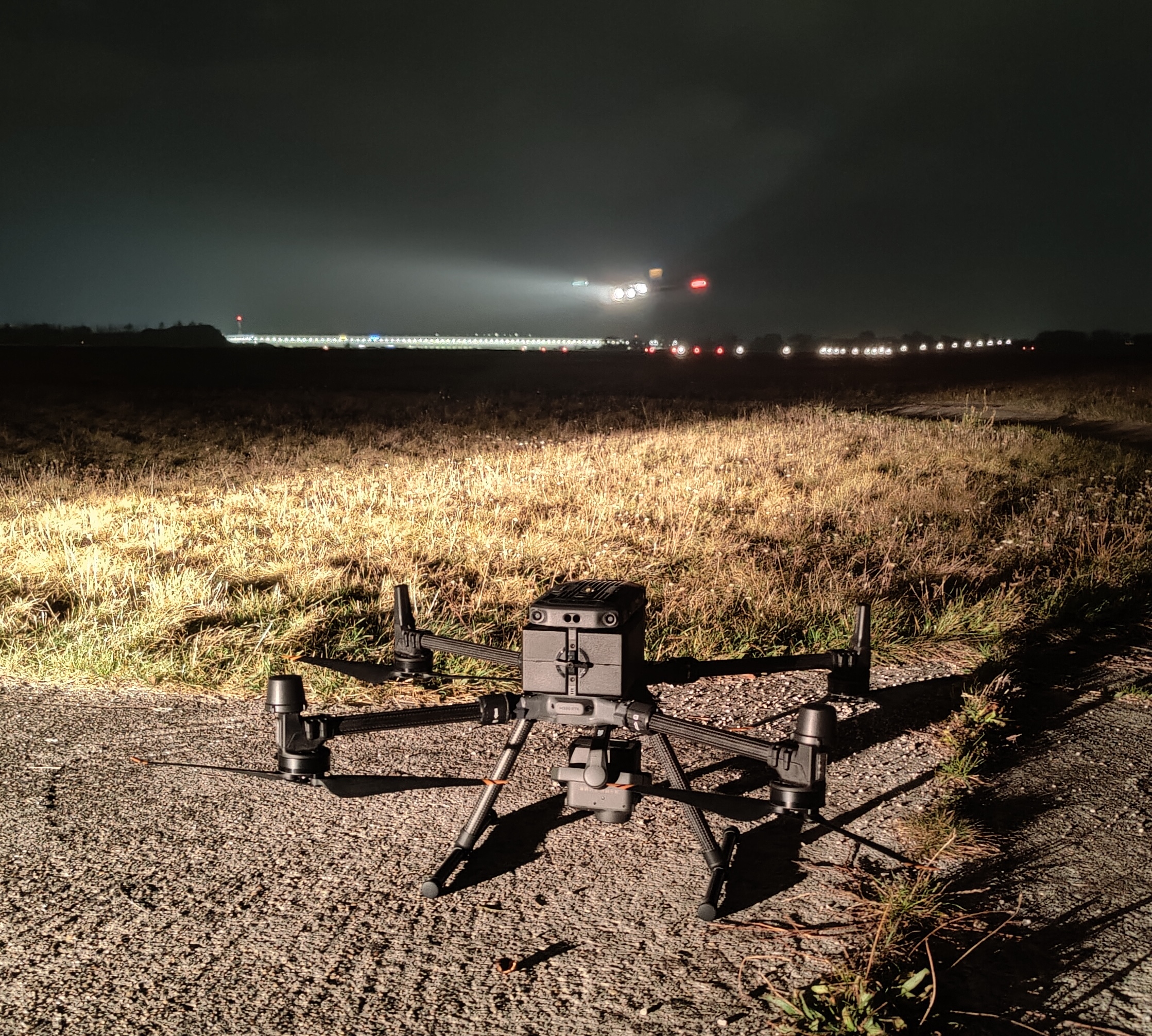
A drone survey does not replace a periodic flight inspection. The order does not name unmanned aircraft as a way to fly an inspection. A drone does not test radio navigation aids such as an ILS. TarmacView inspects airfield lights with a drone, one light at a time, and compares each with its neighbours. The result is a record of the lights between the flights. See drone survey versus flight inspection for the comparison.
Frequently Asked Questions
- How often does a PAPI have to be flight checked?
- It depends on the rule set. The FAA sets no periodic flight inspection for a visual glide slope indicator such as a PAPI. It requires a commissioning inspection for a new one with an instrument procedure. EASA guidance asks for a flight check of the approach, runway and taxiway lights and of the VASIS at least yearly.
- What is a periodic flight inspection?
- A periodic flight inspection is a regularly scheduled flight that checks that a commissioned navigation aid or procedure still meets its standards. The FAA order lists it as one of five types, with site evaluation, commissioning, special and surveillance.
- How often is an ILS flight inspected?
- In the FAA schedule, an ILS with a glide slope has a periodic interval of 540 days, which is about 18 months. A newly commissioned precision facility starts at 90, 180 and 270 days, and then it follows the 540-day schedule.
- Is there a grace period for a periodic flight inspection?
- Yes, in the FAA system. The due date window is 15 days before to 15 days after the due date for a 90-day interval. For all other facilities and procedures the window is 60 days before to 60 days after. An overdue procedure window may be extended by 30 days, and a ground navigation aid window by 7 days, if the stated conditions are met.
- Does the PAPI calibration interval come from the flight inspection?
- No. The ground crew sets the PAPI unit angles and the flight inspection verifies them. The FAA order says that initial settings come from ground adjustments and that flight inspection verifies them. The yearly EASA flight check looks at the pattern and at whether the lights work.
- Does a periodic flight inspection include the airfield lights?
- In the FAA order, the recurring inspection of the lights that support an instrument procedure takes place with the periodic of the primary navigation aid. In the EU, the flight check of the lights belongs to the aerodrome maintenance programme. It happens at least once a year.
- What does a drone inspection replace?
- A drone survey does not replace a periodic flight inspection. The FAA order does not name unmanned aircraft as a way to fly an inspection, and a drone does not test radio navigation aids. A drone survey measures each light on the ground between the flight checks.
References
- faa-order-8200-1d
- Order 8200.1D, Change 2, United States Standard Flight Inspection Manual FAA
- icao-annex-10-vol-i
- Annex 10, Volume I, Radio Navigation Aids: Chapter 2, 2.2 Ground and flight testing ICAO
- easa-ear-aerodromes
- Easy Access Rules for Aerodromes (Regulation (EU) No 139/2014), including CS-ADR-DSN Issue 7 EASA
- faa-ac-150-5340-30j
- AC 150/5340-30J, Design and Installation Details for Airport Visual Aids FAA
This is a reference entry. TarmacView provides drone inspection services and doesn't sell the equipment or materials described in this glossary.